Sourcing tungsten products from overseas can feel like a gamble. Buyers search for terms like "tungsten manufacturer," "tungsten supplier China," or "pure tungsten rod factory" and land on dozens of trading companies that resell material of unknown origin, offer no mill certificates, and disappear after the first shipment goes wrong. For procurement engineers, R&D teams, and purchasing managers who need consistent chemistry, tight tolerances, and predictable lead times, this uncertainty is the single biggest obstacle to placing an order. This guide walks through the four core tungsten product families - Pure Tungsten, Tungsten Copper Alloy, Tungsten Heavy Alloy, and Vacuum Metallizing materials - and explains what international buyers should look for in a factory-direct tungsten partner. Zhuzhou Kingdon Industrial & Commercial Co., Ltd. (ZZKD), based in Zhuzhou, Hunan - China's historic non-ferrous metals hub - has manufactured and exported tungsten and molybdenum materials since 2004, shipping to customers across the USA, UK, Germany, India, Brazil, Poland, Singapore, Japan and beyond.
Why Tungsten Is a Mission-Critical Engineering Material
Tungsten has the highest melting point of any metal (3,422°C) and a density of 19.25 g/cm³, nearly 2.5 times that of steel. Combined with excellent thermal conductivity, low vapor pressure at high temperature, and strong resistance to acids and molten metals, these properties make tungsten indispensable in industries where other metals simply fail: semiconductor and electronics manufacturing, aerospace, medical imaging, lighting, glass processing, and heavy industrial tooling. But raw material properties are only half the story. What actually determines whether a tungsten component performs in the field is how consistently a manufacturer controls powder purity, sintering density, grain structure, and final machining tolerance - batch after batch. That consistency is exactly what buyers should be evaluating before they ever request a quote, and it is the core question this guide is built around: not "what is tungsten," but "who can reliably make it to my specification."
Pure Tungsten: Rod, Bar, Wire, Sheet & Custom Machined Parts
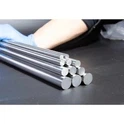
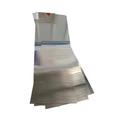
Pure tungsten (typically grade W1 or WAL, minimum purity 99.95%) is supplied as rod, bar, wire, sheet, plate, crucibles, and custom-machined components. It is the material of choice for electrical contacts, welding electrodes, heating elements, X-ray targets, sputtering targets, and high-temperature furnace parts because it retains strength and shape stability at temperatures where most metals soften or oxidize.
The pain points buyers repeatedly raise around pure tungsten sourcing are diameter and surface tolerance consistency (especially for fine tungsten wire down to sub-millimeter diameters used in lighting filaments and probe needles), straightness for long rods used in electrode applications, and traceability of the tungsten powder feedstock. ZZKD produces pure tungsten rod, bar, wire and sheet in-house from powder pressing and sintering through swaging, drawing, and precision grinding, which means diameter, surface finish (mirror-polished, chemically cleaned, or electro-polished), and straightness can be controlled and documented at every stage rather than purchased as semi-finished stock from a third party. This vertical integration is also what allows small-batch customization - down to 1 piece or 1 kilogram - for engineering teams that need prototypes before committing to a production run.
Tungsten Copper Alloy (WCu): Balancing Conductivity and Heat Resistance
Tungsten copper alloy combines tungsten's heat and arc resistance with copper's high electrical and thermal conductivity. Typical compositions range from W70Cu30 to W90Cu10, and the alloy is produced by infiltrating a sintered tungsten skeleton with molten copper, giving a dense, uniform composite rather than a simple mechanical mixture. This material is specified for EDM (electrical discharge machining) electrodes, resistance welding electrodes, high-voltage circuit breaker and switch contacts, spark plug electrodes, and heat sinks or heat spreaders in power electronics where a low thermal expansion coefficient close to that of silicon or ceramics is required.
Buyers evaluating tungsten copper suppliers commonly ask about density uniformity (porosity directly affects conductivity and arc erosion resistance), copper content tolerance, and machinability into fine electrode geometries without chipping. ZZKD manufactures tungsten copper bar, rod, plate, and custom electrode blanks with composition ratios tailored to the application - higher tungsten content for arc-erosion resistance in switchgear, higher copper content where conductivity is the priority - and provides material certificates confirming density and composition for every batch, which is often the single document that determines whether a buyer's QA department will approve the shipment.
Tungsten Heavy Alloy (WNiFe / WNiCu): High Density Where It Matters
Tungsten heavy alloy - tungsten combined with nickel-iron (WNiFe) or nickel-copper (WNiCu) binders - reaches densities of 17.0 to 18.75 g/cm³ while remaining far more machinable and ductile than pure tungsten. This is the material buyers reach for whenever a component needs maximum mass in minimum volume: balance weights and counterweights for aircraft control surfaces and precision instruments, vibration damping masses, radiation shielding for medical and industrial imaging equipment, downhole drilling components for oil and gas, and sporting goods such as dart barrels and golf club weighting.
International specifiers frequently reference ASTM B777 alloy classes (Class 1 through 4) when requesting quotes, and the recurring sourcing concern is whether a supplier can actually test and document density, tensile strength, and hardness against that standard rather than simply claiming compliance. ZZKD produces tungsten heavy alloy rod, bar, plate, and finished machined parts across the standard density and class ranges, with density testing and dimensional inspection reports issued per batch, and offers CNC machining to finished-part tolerances so buyers can order a functional component rather than raw stock they then need to subcontract for machining.
Vacuum Metallizing Materials: Tungsten Filament & Evaporation Boats
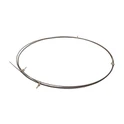
Vacuum metallizing (thermal evaporation coating) is used to deposit a thin metallic film onto plastics, paper, textiles, and glass for products ranging from decorative packaging and mirrors to automotive trim and optical components. The heating elements that vaporize the coating metal - multi-strand tungsten filaments and boat-shaped tungsten evaporators - must maintain shape and resist embrittlement through thousands of heating cycles at temperatures well above 1,000°C.
Coating line operators typically care most about filament life (how many cycles before breakage), consistent resistance/current draw across a batch (so evaporation rate stays uniform across the coating chamber), and fast, reliable restocking since a line down for filament replacement is a direct production loss. ZZKD supplies tungsten basket filaments in 1 to 10 strand configurations, chemically cleaned or electro-polished, sized to customer chamber specifications, along with tungsten and molybdenum evaporation boats - giving coating operators a single supplier for both consumable types instead of juggling two vendors.
The Real Pain Points of Sourcing Tungsten Overseas (and How to Solve Them)
Talk to enough international buyers of tungsten products and the same concerns surface every time:
Quality consistency and documentation. Is this a factory or a trading company reselling unverified stock? Ask directly whether the supplier presses, sinters, and machines in-house, and request mill test reports showing chemistry and mechanical properties for the actual batch being shipped - not a generic datasheet.
MOQ and prototyping flexibility. Many manufacturers require large minimum orders that make it impossible to validate a new part before committing budget. A supplier offering samples and MOQs as low as 1 piece or 1 kilogram removes that barrier for engineering evaluation.
Customization and engineering support. Off-the-shelf dimensions rarely match a real application. Buyers need a technical team that can recommend the right grade, alloy ratio, or density class for a specific operating environment, not just process a purchase order.
Communication, lead time and logistics transparency. Time-zone gaps and language barriers routinely stretch a "15-day lead time" into two months of unexplained delay. Clear, responsive communication and standard export packaging (carton and plywood case) that survives ocean freight matter as much as the metallurgy.
After-sales accountability. When a shipment arrives with a dimensional or quality issue, buyers need a supplier who resolves it rather than one who disappears once payment clears.
ZZKD has built its export process - spanning proforma invoice, sample confirmation, production, and shipping documentation - around closing these specific gaps for customers across North America, Europe, and Asia.
Industries We Serve
ZZKD's tungsten products support semiconductor and electronics manufacturing (sputtering targets, electrodes, heating elements), aerospace and defense (balance weights, structural and shielding components), medical equipment (radiation shielding, imaging components), automotive and industrial tooling (EDM electrodes, welding electrodes), and glass, lighting, and vacuum coating industries (evaporation filaments and boats, furnace components).
Frequently Asked Questions from International Buyers
"What is the difference between pure tungsten and tungsten heavy alloy?" Pure tungsten is a single-element material valued for its extreme melting point and electrical properties, but it is brittle and hard to machine into complex shapes. Tungsten heavy alloy adds a nickel-based binder so the part remains almost as dense while becoming far easier to machine, making it the practical choice whenever a finished, precision-machined component is required rather than raw rod or wire.
"Why does tungsten copper alloy composition matter so much?" The copper-to-tungsten ratio is a direct trade-off between electrical/thermal conductivity (favored by more copper) and arc-erosion resistance and hardness (favored by more tungsten). Buyers should specify the ratio based on the dominant failure mode in their application - conductivity loss versus electrode wear - rather than defaulting to a single "standard" grade.
"Is tungsten difficult to machine, and does that affect lead time?" Pure tungsten and tungsten copper alloy are hard and abrasive, requiring specialized tooling and slower feed rates than conventional metals, which is why in-house CNC and grinding capability - rather than outsourcing machining to a third shop - shortens lead time and protects tolerance control. Tungsten heavy alloy machines more like a tool steel and is comparatively straightforward.
"What certifications should a tungsten supplier provide?" At minimum, buyers should expect a material test report covering chemical composition and density for each batch. For heavy alloy parts referencing ASTM B777, request the specific class and confirmation of tensile strength and elongation testing. Buyers with formal quality systems should also confirm the manufacturer's ISO 9001 status.
"Can I get a sample before placing a production order?" Reputable manufacturers, including ZZKD, generally provide free or low-cost samples for material verification before committing to a full production run - this is standard practice for buyers validating a new supplier or a new part.
"What is the typical lead time for custom tungsten parts?" Standard rod, bar, and wire stock can often ship within days to two weeks, while custom-machined parts or new alloy compositions typically require 15–25 working days depending on complexity and order volume; buyers should always confirm current capacity at the time of quotation rather than relying on a generic website estimate.
Conclusion
Choosing a tungsten supplier is ultimately a choice about risk: the risk of inconsistent chemistry, missed tolerances, and unreliable delivery versus the assurance of a manufacturer that controls its own process from powder to finished part. With two decades of production experience, in-house capability across Pure Tungsten, Tungsten Copper Alloy, Tungsten Heavy Alloy, and Vacuum Metallizing materials, and an export track record spanning more than a dozen countries, ZZKD is positioned to be that long-term manufacturing partner. Contact our engineering team with your drawing or application details for a technical recommendation, free sample, and formal quotation.