Procurement teams searching "molybdenum manufacturer," "TZM molybdenum supplier," or "pure molybdenum rod China" are usually trying to solve one problem: finding a factory that can deliver consistent high-temperature material with verifiable chemistry, on a timeline that matches a production schedule rather than a trading company's convenience. Molybdenum and its TZM alloy sit at the center of some of the most demanding manufacturing environments in the world - sapphire crystal growth, vacuum furnace construction, glass melting, and hot-work tooling - where a supplier's inconsistency shows up immediately as scrapped parts or downtime. This guide covers Pure Molybdenum and TZM Molybdenum in detail and outlines what international buyers should evaluate before selecting a supplier. Zhuzhou Kingdon Industrial & Commercial Co., Ltd. (ZZKD) has manufactured tungsten and molybdenum materials from its Hunan, China facility since 2004, with an export network spanning the USA, UK, Germany, India, Brazil, Poland, Czech Republic, Slovenia, Singapore, Japan, and Taiwan.
Why Molybdenum Is Essential for High-Temperature Manufacturing
Molybdenum has a melting point of 2,623°C, one of the highest of any engineering metal, combined with low thermal expansion, high stiffness, and good electrical and thermal conductivity relative to other refractory metals. It also resists attack by many molten glasses and non-ferrous metals, and its low vapor pressure means it does not readily contaminate a vacuum or inert-atmosphere process at high temperature. These properties are why molybdenum, rather than a more common metal, is specified whenever a process pushes past the operating limits of stainless steel or nickel superalloys - inside vacuum furnaces, crystal growth systems, and glass-melting equipment where any dimensional drift or contamination ruins the product being processed, not just the molybdenum part itself.
Because molybdenum parts typically sit inside equipment that itself represents a large capital investment - a sapphire furnace, a glass melting tank, a die-casting machine - buyers are rarely just comparing price per kilogram. They are comparing the downstream cost of a furnace shutdown, a scrapped sapphire boule, or a cracked die-casting core against the upfront cost of the molybdenum component. That is the framing worth keeping in mind throughout this guide: the "cheaper" molybdenum supplier is only cheaper if the material actually performs to the operating temperature, atmosphere, and load cycle it was specified for.
Pure Molybdenum: Rod, Sheet, Wire, Boat & Electrode
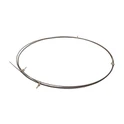
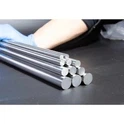
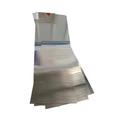
Pure molybdenum (grades such as Mo1 and MHC, purity typically 99.95% minimum) is supplied as rod, bar, sheet, plate, wire, foil, evaporation boats, and custom-machined electrodes and components. Typical applications include heating elements and heat shields inside vacuum and hydrogen furnaces, electrodes for electric glass melting, sputtering targets for thin-film deposition, and structural components in sapphire and silicon crystal-growth furnaces, where molybdenum's stiffness at temperature keeps hot-zone geometry stable through thousands of thermal cycles.
Buyers sourcing pure molybdenum most often raise concerns about surface finish (critical for sputtering targets, where surface defects translate directly into film defects), dimensional stability of large sheet and plate through the rolling and annealing process, and resistance to embrittlement after repeated thermal cycling in furnace service. Because ZZKD controls pressing, sintering, rolling or swaging, and finish grinding or polishing in-house, surface finish and dimensional tolerance can be verified and adjusted before shipment rather than relying on a re-seller's stated specification.
TZM Molybdenum Alloy: Superior Strength at Extreme Temperatures
TZM (molybdenum alloyed with small additions of titanium and zirconium, strengthened by trace carbon) offers substantially higher recrystallization temperature, creep resistance, and room- and elevated-temperature strength than pure molybdenum, while retaining good thermal conductivity and machinability. This combination makes TZM the material of choice for hot-work tooling and die-casting cores, pins, and inserts that must survive repeated thermal cycling against molten aluminum, zinc, or brass without softening; structural components in high-temperature furnace and aerospace applications; and stirrers, plungers, and orifice rings used in glass processing equipment where dimensional creep under load at temperature directly determines tool life.
The recurring question from buyers evaluating TZM suppliers is whether the alloy has actually been processed to achieve the recrystallization resistance the grade is known for, or simply cast and machined without the correct thermomechanical treatment - a shortcut that produces a part chemically labeled "TZM" but without its characteristic high-temperature strength. Requesting hardness and grain-structure data alongside the standard chemistry certificate is the most reliable way to confirm proper processing, and ZZKD provides this documentation on request for TZM rod, bar, and finished tooling components.
TZM is also increasingly specified for structural brackets, fasteners, and support components in high-temperature vacuum and semiconductor process equipment, where its strength-to-weight ratio at elevated temperature outperforms nickel superalloys while remaining lighter. For buyers moving a design from pure molybdenum to TZM to solve a creep or fatigue problem, it is worth noting that TZM is somewhat harder to machine and typically carries a price premium over pure molybdenum - so the material upgrade should be matched to an application that genuinely operates near molybdenum's temperature or load limits, rather than applied by default across an entire parts list.
Common Buyer Pain Points in Molybdenum Sourcing and How ZZKD Solves Them
Chemistry and process verification. Buyers cannot see inside a supplier's furnace, so documentation is the only substitute - request composition certificates for every batch and, for TZM, evidence of proper stress-relief or recrystallization-resistant processing.
Precision for sputtering and semiconductor-grade parts. Surface roughness, flatness, and grain uniformity in molybdenum sputtering targets and crystal-growth components directly affect the yield of the customer's own downstream process, so buyers should ask for actual inspection data rather than a nominal tolerance range on a datasheet.
Small-batch customization for prototyping. New furnace or tooling designs need a first article before a production order is placed. A manufacturer offering samples and low MOQs (down to 1 piece or 1 kilogram) lets engineering teams validate fit and performance without committing to bulk purchase.
Packaging and handling for oxidation-sensitive stock. Molybdenum and TZM surfaces can be sensitive to moisture and handling damage during long ocean freight; proper vacuum-sealed or moisture-protected packaging inside standard export carton and plywood cases prevents surface degradation before the material even reaches the customer's facility.
Responsive technical support across time zones. Selecting the right molybdenum grade or TZM tempering condition for a specific furnace atmosphere or die-casting alloy is a technical decision, not just a purchasing one - buyers benefit from a supplier whose technical team responds quickly enough to keep a project on schedule despite time-zone gaps.
ZZKD's 20 years of manufacturing experience and structured export process - sample confirmation, proforma invoice, production, and shipping documentation - are built to close exactly these gaps for international buyers.
Quality Standards Buyers Should Ask About
International standards such as ASTM B386 (molybdenum and molybdenum alloy sheet, strip, plate, and foil) and ASTM B387 (molybdenum and molybdenum alloy bar, rod, and wire) define chemistry, mechanical property, and dimensional requirements that many industrial buyers already reference internally, even if their purchase order does not spell it out. Asking a supplier directly whether material can be tested and certified against the relevant ASTM designation - rather than an unspecified in-house "standard" - is one of the fastest ways to separate an established manufacturer from a reseller. Buyers working with sputtering targets or crystal-growth components should also ask about grain size control and any hot isostatic pressing (HIP) or forging steps used to close internal porosity, since porosity that is invisible on a standard dimensional inspection can still cause target cracking or contamination during use.
Industries We Serve
ZZKD's molybdenum and TZM products support semiconductor and photovoltaic manufacturing (sapphire and silicon crystal-growth furnace components, sputtering targets), glass manufacturing (electrodes, stirrers, and orifice rings for electric glass melting), die casting and hot-work tooling (TZM cores, pins, and inserts), vacuum and high-temperature furnace construction (heating elements, heat shields, structural supports), and aerospace and specialty industrial equipment requiring high strength-to-weight performance at extreme temperature.
Frequently Asked Questions from International Buyers
"What is the difference between pure molybdenum and TZM molybdenum?" Pure molybdenum offers excellent conductivity and thermal stability for applications like heating elements and sputtering targets, but softens and creeps more readily at very high temperatures. TZM adds titanium and zirconium to raise recrystallization temperature and creep resistance significantly, making it the better choice for load-bearing or repeatedly cycled hot-work applications such as die-casting tooling.
"At what temperature does molybdenum start to lose strength?" Pure molybdenum typically begins to recrystallize and soften above roughly 1,000–1,100°C in continuous service, while properly processed TZM maintains useful strength to well over 1,300°C, which is why TZM is specified for the most demanding thermal-cycling applications.
"Does molybdenum oxidize in normal use?" Molybdenum oxidizes rapidly in open air above roughly 500–600°C, which is why molybdenum furnace components are almost always used in vacuum, hydrogen, or inert-atmosphere environments rather than exposed directly to air at high temperature.
"What certifications or test data should a molybdenum supplier provide?" At minimum, a chemical composition certificate per batch; for TZM, buyers should also request hardness data and, where critical, evidence of the recrystallization or annealing treatment applied, since two parts with identical nominal chemistry can perform very differently depending on processing.
"Can molybdenum parts be custom machined to a drawing?" Yes - reputable manufacturers offer custom machining of rod, bar, and sheet stock into finished electrodes, boats, tooling components, and other geometries to customer drawings, which is generally more cost-effective than purchasing raw stock and outsourcing machining separately.
"What is a typical lead time for molybdenum or TZM orders?" Standard stock shapes often ship within one to two weeks, while custom-machined parts typically require 15–25 working days depending on complexity, quantity, and current production load; confirming current lead time at the quotation stage is always more reliable than a general website estimate.
"Should I choose pure molybdenum or TZM for a die-casting application?" For high-volume die casting of aluminum or zinc where cores and pins face repeated thermal shock, TZM's higher creep resistance generally delivers longer tool life and justifies its price premium over pure molybdenum; for lower-cycle or lower-temperature tooling, pure molybdenum may be sufficient and more cost-effective.
Conclusion
Molybdenum and TZM molybdenum perform in environments where few other materials survive, but only when the manufacturing process behind them is controlled and verifiable. With two decades of in-house production experience across Pure Molybdenum and TZM Molybdenum, batch-level material documentation, low-MOQ prototyping support, and an established export process serving customers across North America, Europe, and Asia, ZZKD is built to be a dependable long-term molybdenum supply partner. Send your drawing or application requirements to our engineering team for a technical recommendation, sample, and formal quotation.