In the rapidly evolving fields of telecommunications, aerospace, and high-performance computing, managing intense thermal loads is a paramount challenge. As electronic devices become more powerful and compact, dissipating heat efficiently is critical for ensuring reliability, performance, and longevity. This is where advanced thermal management materials, specifically Tungsten copper alloy and Molybdenum copper alloy, demonstrate their indispensable value. By ingeniously combining the beneficial properties of refractory metals and copper, these composites have become the material of choice for next-generation heat sink material solutions.
1. Core Properties: The Foundation of Excellence
Tungsten Copper and Molybdenum Copper alloys are powder metallurgy composites. They are not simple mixtures but are created through sophisticated processes like infiltration sintering, where a porous tungsten or molybdenum skeleton is filled with molten copper. This results in a unique set of tailorable properties:
- Controllable Thermal Expansion: The Thermal Expansion Coefficient (CTE) can be precisely engineered by adjusting the metal ratio. For instance, a Tungsten copper sheet with 85%W-15%Cu can achieve a CTE as low as 6.5 ppm/°C, allowing for a near-perfect match with ceramics like Alumina or semiconductor materials like GaAs. This minimizes thermal stress and prevents failure in critical bonded interfaces.
- High Thermal Conductivity: The continuous copper phase within the composite provides an excellent path for heat transfer. Typical thermal conductivity values range from 160 to 240 W/(m·K), enabling rapid heat spreading away from hot spots.
- Exceptional Mechanical Strength: Even with a high copper content, the refractory metal skeleton provides remarkable strength and rigidity at elevated temperatures, far surpassing pure copper. This ensures dimensional stability under thermal cycling.
- The following chart compares the key physical properties of these alloys with pure copper, highlighting their superior adaptability:

2. Material Grades and Forms: Meeting Diverse Application Needs
These alloys are available in various compositions to meet specific thermal and mechanical requirements.
- Common Tungsten Copper Alloys: W70Cu30, W80Cu20, W85Cu15, W90Cu10. Higher tungsten content increases hardness and lowers CTE, while higher copper content boosts thermal conductivity.
- Common Molybdenum Copper Alloys: Mo60Cu40, Mo70Cu30, Mo80Cu20, Mo85Cu15. Molybdenum copper generally offers a better balance of machinability and performance for many applications.
- For integration into thermal systems, these materials are supplied in precise forms:
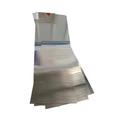
- Tungsten Copper Sheet/Plate: Used as direct heat spreaders or substrates. They are often machined into custom shapes to fit specific module layouts.
- Flanges and Submounts: Critical components in laser diode packages and RF power amplifiers, providing both thermal management and structural support.
- Custom Machined Parts: Including heat sink bases, carrier plates, and lead frames, designed for complex electronic assemblies.
3. Key Application Areas
The unique property matrix of W-Cu and Mo-Cu alloys makes them ideal for the most demanding thermal environments:
- Microelectronics & Power Modules: Serving as Heat spreaders and substrates for high-power IGBTs, CPUs, and GPUs. They effectively transfer heat from semiconductor dies to larger, convective-cooled heat sinks.
- RF & Microwave Communications: In 5G base stations, radar systems, and satellite communications equipment, these materials are used for microwave heat sinks, carrier flanges, and waveguide components. They ensure signal stability and power output by keeping amplifier chips cool.
- Aerospace & Defense: Used in electronic packages for avionics, guidance systems, and airborne radar, where reliability under extreme temperature fluctuations is non-negotiable.
- High-Power Laser Diodes: Acting as submounts and heat sinks, they manage the intense localized heat generated by laser junctions, preventing wavelength drift and power degradation.
4. Partnering with a Trusted Supplier: Zhuzhou Kingdon
Selecting a reliable and experienced manufacturer is as crucial as selecting the right material grade. Zhuzhou Kingdon Industrial & Commercial Co., Ltd (W/Mo Since 2004) stands out as a leading specialist in tungsten and molybdenum products.
With nearly two decades of expertise, Kingdon offers comprehensive solutions from material formulation to finished, precision-machined parts. Their in-house powder metallurgy production ensures strict control over material purity, density, and homogeneity-factors that directly impact thermal performance and reliability. Whether your project requires a standard Tungsten copper sheet or a complex, brazed assembly, Kingdon provides the technical support and manufacturing excellence needed for success.
For more information or to discuss your specific thermal management requirements, please contact:
Zhuzhou Kingdon Industrial & Commercial Co., Ltd (W/Mo Since 2004)
Add: No.9 Road of Zhongda, High-Tech Industrial park, Zhuzhou, Hunan, China
Tel: +86-731 28470377 / 22868227
Fax: +86-731 28410491
Web: www.kdmet.com
5. Conclusion
In the relentless push for greater power density and miniaturization, traditional thermal solutions are reaching their limits. Tungsten copper and Molybdenum copper alloys offer a superior, engineered alternative. Their ability to be tailored for specific CTE and conductivity needs, combined with high strength and proven reliability, positions them as the cornerstone material for advanced thermal management. From the core of a 5G tower to the depths of space, these composites are quietly enabling the technologies of today and tomorrow by solving one of engineering's most persistent challenges: keeping things cool under pressure.