The Critical Cathode: Electron Beam Filaments in Ion Implantation Systems and the Value of Stable Supply Chains
In the highly specialized world of semiconductor manufacturing, where atomic-level precision dictates the functionality of every microchip, ion implantation stands as a cornerstone process. It is the definitive method for deliberately introducing dopant atoms into a silicon wafer to modify its electrical properties, creating the essential P-N junctions that form the bedrock of transistors. While the ion beam itself rightfully commands attention, its very generation hinges on a deceptively simple yet profoundly critical component: the electron beam filament. This thermionic emitter serves as the primary electric light source part within the intricate electric vacuum components of the ion source, acting as the silent, energetic heartbeat of the entire ion implantation process.
This article delves into the specific roles, operational challenges, and evolving technologies of electron beam filaments within ion implantation equipment, exploring why this component is pivotal for achieving the purity, stability, and productivity demanded by modern semiconductor fabs. Furthermore, it highlights the critical importance of a reliable supply chain for these high-wear consumables, where companies like Zhuzhou Kingdon Industrial & Commercial Co., Ltd. play an indispensable role in ensuring the continuous operation of global semiconductor production lines.
I. The Ion Implantation Context: A Demand for Purity, Precision, and Predictability
Ion implantation involves ionizing dopant atoms (such as Boron, Phosphorus, or Arsenic), accelerating them to high energies, and directing them onto a silicon substrate. The process occurs within a high-vacuum environment to prevent beam scattering and wafer contamination. The journey of an ion begins at the ion source, a complex assembly of electric vacuum components designed to create, extract, and initially focus a plasma from a feedstock gas.
The core challenge within the ion source is twofold: first, to generate a dense, stable plasma with a high fraction of the desired dopant ion species while minimizing contamination; and second, to ensure this process is repeatable and reliable over thousands of hours of operation with minimal unscheduled downtime. This brings the electron beam filament-a consumable part with a finite lifespan-into sharp focus as a critical factor in production planning and cost of ownership.
II. The Electron Beam Filament: Function and Mechanism as the Primary Electric Light Source
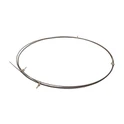
Inside the ion source chamber, the filament is a precisely engineered electric light source part that emits a cloud of electrons. Typically constructed from robust refractory metals like tungsten or tantalum due to their high melting points and favorable electron emission properties, the filament is resistively heated to extreme temperatures (often exceeding 2200°C).
When energized, it releases a flood of primary electrons. These electrons are accelerated by a strong electric field, forming a controlled electron beam. Within the ion source, this beam performs two indispensable functions:
1.Gas Ionization: The high-energy electrons collide with neutral dopant gas molecules, stripping electrons and creating the positive ions necessary for the beam.
2. Plasma Sustenance and Density Control: The continuous electron stream replenishes energy in the plasma. The filament's emission current directly controls plasma density, which in turn dictates the available ion beam current for implantation.
III. Operational Scenarios, Wear, and the Need for Supply Stability
The filament is a wear component. Its gradual evaporation and potential contamination from plasma interactions dictate a scheduled replacement cycle. This reality makes operational scenarios heavily dependent on a predictable supply:
High-Current Implantation: Processes requiring high dose rates push filaments to their limits, demanding high emission currents and leading to faster wear. Fabs running such processes require a steady, on-time supply of high-quality replacements to maintain throughput.
Low-Energy Precision Implantation: Stability is paramount. Variations in filament emission can cause plasma fluctuations, affecting beam consistency. Using filaments with consistent material properties and geometry from batch to batch is crucial for process control.
Minimizing Unscheduled Downtime: A filament failure before its scheduled replacement halts the implanter. The time required to vent the source, replace the filament, pump down, and requalify the tool is extremely costly. Therefore, fabs rely on suppliers who can guarantee not just the quality of a single order, but a long-term, stable supply of reliable filaments. This mitigates the risk of production line stoppages due to part shortages.
IV. The Role of Specialized Suppliers: Zhuzhou Kingdon Industrial & Commercial Co., Ltd.
In this high-stakes environment, the value of a dependable, technically competent supplier cannot be overstated. Companies like Zhuzhou Kingdon Industrial & Commercial Co., Ltd. have established themselves as key partners in the semiconductor equipment ecosystem. Their role extends beyond simple manufacturing:
Consistent Quality and Material Purity: They provide electron beam filaments manufactured to strict specifications, ensuring consistent geometric tolerances, material composition (e.g., specific doped tungsten or tantalum alloys), and emission characteristics. This consistency is vital for process repeatability.
Stable Production Capacity and Supply Assurance: For semiconductor fabs, a forecastable supply chain is as important as part quality. A reliable supplier maintains sufficient production capacity and raw material inventory to meet both planned orders and potential urgent requests, ensuring that fabs can execute their maintenance schedules without delay.
Technical Support and Collaboration: Understanding the harsh operating environment of ion sources, suppliers like Kingdon can work with equipment manufacturers and end-users to optimize filament design for specific applications, potentially extending service life or improving beam stability.
Integration within Electric Vacuum Components: As a core electric light source part, the filament must perfectly interface with other electric vacuum components-the source chamber, insulators, and electrodes. A professional supplier ensures their products meet the exact mechanical and electrical interface requirements for seamless integration and reliable performance.
V. Challenges and the Future Outlook
The future of ion implantation demands even more from filaments and their supply chain:
Advanced Node Demands: As process nodes shrink to 3nm and below, the tolerance for contamination and process variation approaches zero. Filaments must be manufactured in ultra-clean environments with ever-higher purity standards.
Predictive Maintenance Integration: Data on filament performance (voltage, current trends) can be used for predictive analytics. Close collaboration between equipment makers, fabs, and component suppliers can refine these models, turning scheduled replacements into precisely timed optimizations.
Supply Chain Resilience: Recent global events have underscored the strategic importance of a resilient, multi-source supply chain for critical components. Stable, technically capable suppliers in key regions provide the industry with essential buffer and flexibility.
VI. Conclusion: An Indispensable Component, A Vital Partnership
In conclusion, the electron beam filament is far more than a simple consumable. It is a precision electric light source part whose reliable operation is fundamental to the ion implantation process. Its performance and predictable lifespan directly impact the uptime, output, and yield of multi-million-dollar implantation tools.
Therefore, securing a stable supply of high-quality filaments is a strategic imperative for semiconductor manufacturers. Suppliers like
Zhuzhou Kingdon Industrial & Commercial Co., Ltd. provide this critical stability. By delivering consistent, reliable products and ensuring supply chain continuity, they empower equipment manufacturers and fabs to focus on pushing the boundaries of technology, confident that the essential "heartbeat" of their ion sources will continue to pulse steadily. In the intricate dance of semiconductor manufacturing, such reliable partnerships are not just convenient; they are foundational to progress.