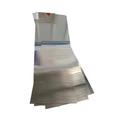
As a supplier specializing in Vacuum Metalizing, I've had the privilege of working closely with a wide range of metals in this fascinating process. Vacuum Metalizing is a technique that involves depositing a thin layer of metal onto a substrate in a vacuum environment, creating a decorative or functional finish. This process is widely used in various industries, including automotive, electronics, and packaging. In this blog, I'll explore the metals commonly used in Vacuum Metalizing, their properties, and their applications.
Aluminum
Aluminum is one of the most commonly used metals in Vacuum Metalizing. It is lightweight, corrosion-resistant, and has excellent reflectivity, making it ideal for applications where a shiny, reflective surface is desired. Aluminum is also relatively inexpensive, which makes it a cost-effective choice for many industries.
One of the key advantages of using aluminum in Vacuum Metalizing is its ability to form a thin, uniform layer on the substrate. This layer can be as thin as a few nanometers, yet it can provide excellent protection against corrosion and wear. Aluminum is also highly reflective, which makes it suitable for applications such as mirrors, automotive trim, and packaging.
In addition to its decorative properties, aluminum also has some functional benefits. For example, it can be used to create a conductive layer on a substrate, which is useful in electronics applications. Aluminum can also be used to improve the thermal conductivity of a substrate, which is important in applications where heat dissipation is a concern.
Copper
Copper is another metal that is commonly used in Vacuum Metalizing. It is a highly conductive metal, which makes it suitable for applications where electrical conductivity is required. Copper is also corrosion-resistant and has a beautiful, warm color, which makes it a popular choice for decorative applications.
One of the main advantages of using copper in Vacuum Metalizing is its ability to form a thin, continuous layer on the substrate. This layer can provide excellent electrical conductivity, even at very low thicknesses. Copper is also highly malleable, which means it can be easily formed into complex shapes.
Copper is commonly used in electronics applications, such as printed circuit boards and semiconductor devices. It is also used in decorative applications, such as jewelry and architectural trim. In addition, copper can be used to create a barrier layer on a substrate, which can prevent the diffusion of other metals or gases.
Gold
Gold is a precious metal that is highly valued for its beauty and rarity. It is also a very stable metal, which means it is resistant to corrosion and oxidation. Gold is commonly used in Vacuum Metalizing for decorative applications, such as jewelry, watches, and luxury packaging.


One of the main advantages of using gold in Vacuum Metalizing is its ability to create a thin, uniform layer on the substrate. This layer can provide a beautiful, shiny finish that is highly resistant to wear and tarnish. Gold is also a very soft metal, which means it can be easily formed into complex shapes.
In addition to its decorative properties, gold also has some functional benefits. For example, it can be used to create a conductive layer on a substrate, which is useful in electronics applications. Gold can also be used to improve the biocompatibility of a substrate, which is important in medical applications.
Silver
Silver is another precious metal that is commonly used in Vacuum Metalizing. It is a highly conductive metal, which makes it suitable for applications where electrical conductivity is required. Silver is also very reflective, which makes it a popular choice for decorative applications.
One of the main advantages of using silver in Vacuum Metalizing is its ability to form a thin, continuous layer on the substrate. This layer can provide excellent electrical conductivity, even at very low thicknesses. Silver is also highly malleable, which means it can be easily formed into complex shapes.
Silver is commonly used in electronics applications, such as printed circuit boards and semiconductor devices. It is also used in decorative applications, such as jewelry and tableware. In addition, silver can be used to create a antibacterial layer on a substrate, which is useful in medical applications.
Chromium
Chromium is a hard, corrosion-resistant metal that is commonly used in Vacuum Metalizing. It is a popular choice for applications where a durable, scratch-resistant finish is required. Chromium is also highly reflective, which makes it suitable for decorative applications.
One of the main advantages of using chromium in Vacuum Metalizing is its ability to form a thin, hard layer on the substrate. This layer can provide excellent protection against wear and corrosion. Chromium is also highly resistant to oxidation, which means it can maintain its shiny finish for a long time.
Chromium is commonly used in automotive applications, such as wheels and trim. It is also used in decorative applications, such as bathroom fixtures and kitchen appliances. In addition, chromium can be used to create a barrier layer on a substrate, which can prevent the diffusion of other metals or gases.
Titanium
Titanium is a lightweight, strong metal that is commonly used in Vacuum Metalizing. It is a popular choice for applications where a high strength-to-weight ratio is required. Titanium is also highly corrosion-resistant, which makes it suitable for applications in harsh environments.
One of the main advantages of using titanium in Vacuum Metalizing is its ability to form a thin, hard layer on the substrate. This layer can provide excellent protection against wear and corrosion. Titanium is also highly biocompatible, which means it can be used in medical applications.
Titanium is commonly used in aerospace applications, such as aircraft components and satellites. It is also used in medical applications, such as implants and prosthetics. In addition, titanium can be used to create a decorative finish on a substrate, which is useful in jewelry and watchmaking.
Tungsten
Tungsten is a dense, hard metal that is commonly used in Vacuum Metalizing. It is a popular choice for applications where a high melting point and high strength are required. Tungsten is also highly resistant to wear and corrosion, which makes it suitable for applications in harsh environments.
One of the main advantages of using tungsten in Vacuum Metalizing is its ability to form a thin, hard layer on the substrate. This layer can provide excellent protection against wear and corrosion. Tungsten is also highly conductive, which means it can be used in electronics applications.
Tungsten is commonly used in lighting applications, such as filaments for incandescent bulbs. It is also used in electronics applications, such as semiconductors and circuit boards. In addition, tungsten can be used to create a decorative finish on a substrate, which is useful in jewelry and watchmaking. For more information about tungsten filaments used in Vacuum Metalizing, you can visit Internal Heater GH Tungsten Filament and Electron Beam Tungsten Filament.
Conclusion
In conclusion, there are many metals that are commonly used in Vacuum Metalizing, each with its own unique properties and applications. Aluminum, copper, gold, silver, chromium, titanium, and tungsten are just a few of the metals that are used in this process. As a Vacuum Metalizing supplier, I have the expertise and experience to help you choose the right metal for your specific application. Whether you need a decorative finish or a functional coating, I can provide you with high-quality Vacuum Metalizing services.
If you're interested in learning more about Vacuum Metalizing or would like to discuss your specific requirements, please don't hesitate to contact me. I'm always happy to help and look forward to working with you. You can find more information about Vacuum Metalizing on our website Vacuum Metalizing.
References
- "Vacuum Deposition onto Plastics", edited by Brian P. Pate
- "Handbook of Physical Vapor Deposition (PVD) Processing", edited by Kenneth M. Schulz
- "Thin Film Processes II", edited by John L. Vossen and Werner Kern