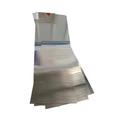
As a supplier of TZM molybdenum, I am often asked about the standard specifications for TZM molybdenum plates. TZM molybdenum, an alloy composed mainly of molybdenum with small additions of titanium, zirconium, and carbon, is known for its excellent high - temperature strength, creep resistance, and good thermal conductivity. In this blog, I'll delve into the key standard specifications for TZM molybdenum plates to provide a comprehensive understanding for potential buyers and industry enthusiasts.
Chemical Composition
The chemical composition of TZM molybdenum is a critical specification. The base element is molybdenum (Mo), which typically accounts for more than 99% of the alloy after considering the addition of other elements. Titanium (Ti) is added in the range of 0.4 - 0.5%, zirconium (Zr) in the range of 0.06 - 0.12%, and carbon (C) in the range of 0.01 - 0.04%. These trace elements play a significant role in enhancing the alloy's performance. Titanium and zirconium form fine carbides that strengthen the alloy, especially at high temperatures. The presence of carbon helps in the formation of these beneficial carbide phases. For example, the fine dispersion of TiC and ZrC particles restricts the movement of dislocations within the material, thereby improving its strength and creep resistance.


Physical Properties
Density
The density of TZM molybdenum is approximately 10.2 g/cm³. This relatively high density is due to the high atomic mass of molybdenum and the contributions of the other alloying elements. The density is an important property as it affects the weight and mass of the TZM molybdenum plates, which can be crucial in applications where weight and space are limited, such as in aerospace components.
Melting Point
TZM molybdenum has an extremely high melting point, around 2617 °C. This high melting point makes it suitable for applications in high - temperature environments, such as in the manufacturing of furnaces, where the plates need to withstand intense heat without losing their structural integrity.
Thermal Conductivity
With a thermal conductivity of about 138 W/(m·K), TZM molybdenum plates are excellent heat conductors. This property is beneficial in applications where heat dissipation is required, such as in electronic devices or heat exchangers. The high thermal conductivity allows for efficient transfer of heat, reducing the risk of overheating and improving the overall performance of the system.
Mechanical Properties
Tensile Strength
The tensile strength of TZM molybdenum plates is an important mechanical specification. At room temperature, the ultimate tensile strength is typically in the range of 650 - 750 MPa. As the temperature increases, the tensile strength decreases but still remains relatively high compared to other materials. For example, at 1000 °C, the ultimate tensile strength can be around 200 - 300 MPa. This high - temperature strength is one of the key advantages of TZM molybdenum, making it suitable for applications in high - stress and high - temperature environments.
Yield Strength
The yield strength, which represents the stress at which the material begins to deform plastically, is also an important property. At room temperature, the yield strength of TZM molybdenum plates is usually in the range of 550 - 650 MPa. Similar to the tensile strength, the yield strength decreases with increasing temperature but maintains a reasonable value at elevated temperatures.
Elongation
Elongation is a measure of the material's ductility, indicating the amount of deformation it can undergo before fracture. TZM molybdenum plates typically have an elongation of about 20 - 30% at room temperature. This ductility is beneficial as it allows the plates to be formed and fabricated into various shapes without cracking, making it easier to use in different manufacturing processes.
Dimensions and Tolerances
Thickness
TZM molybdenum plates are available in a wide range of thicknesses, typically from 0.1 mm to 100 mm. The specific thickness required depends on the application. For example, in thin - film deposition applications, very thin plates in the range of 0.1 - 1 mm may be used, while in heavy - duty industrial applications, thicker plates of 50 - 100 mm may be required. The dimensional tolerance for thickness is usually within ±0.05 mm for thin plates and ±0.5 mm for thicker plates, ensuring a high level of precision.
Width and Length
The width and length of TZM molybdenum plates also vary according to customer requirements. Standard widths can range from 100 mm to 1000 mm, and lengths can range from 200 mm to 2000 mm. The tolerance for width and length is typically within ±1 mm to ensure that the plates fit precisely into the intended applications.
Surface Quality
The surface quality of TZM molybdenum plates is an important specification. The plates should have a smooth surface finish with no visible cracks, pits, or inclusions. The surface roughness is usually specified in terms of Ra (average roughness). For most applications, an Ra value of less than 1.6 μm is required to ensure good bonding and performance. Additionally, the plates may be supplied with a protective coating to prevent oxidation and corrosion during storage and transportation.
Applications of TZM Molybdenum Plates
The unique properties of TZM molybdenum plates make them suitable for a wide range of applications. In the aerospace industry, TZM molybdenum plates are used in the manufacturing of rocket nozzles, engine components, and heat shields due to their high - temperature strength and excellent thermal conductivity. In the semiconductor industry, they are used as heating elements and crucibles for the production of high - purity silicon and other semiconductor materials. The TZM Molybdenum Sheet is also widely used in the glass industry for the production of glass - melting furnaces and in the metalworking industry for hot - working dies and molds.
Quality Control
As a TZM molybdenum supplier, we have a strict quality control system in place to ensure that our TZM molybdenum plates meet the standard specifications. We use advanced testing equipment, such as spectrometers for chemical analysis, tensile testing machines for mechanical property testing, and surface profilometers for surface quality inspection. Each batch of plates is thoroughly inspected before shipment to ensure that it meets the customer's requirements.
Conclusion
In conclusion, the standard specifications for TZM molybdenum plates cover a wide range of aspects, including chemical composition, physical and mechanical properties, dimensions and tolerances, and surface quality. These specifications are crucial for ensuring the performance and reliability of the plates in various applications. If you are in need of TZM molybdenum plates, whether it's the TZM Molybdenum Sheet, TZM Material, or TZM Molybdenum Rod, we are here to provide you with high - quality products that meet your specific needs. We welcome you to contact us for further discussion and procurement negotiation to ensure that you get the best TZM molybdenum solutions for your projects.
References
- "Molybdenum and Molybdenum Alloys" by ASM International
- "High - Temperature Materials: Properties and Applications" by John Wiley & Sons