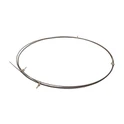
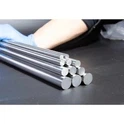
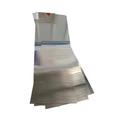
Molybdenum, a metallic element with a high melting point and high strength, exhibits different properties in a vacuum environment than in the atmosphere.
In a vacuum, molybdenum exhibits excellent corrosion resistance and high-temperature stability. However, in the atmosphere, molybdenum is susceptible to gases such as oxygen and water vapor, causing its performance to deteriorate.
In a vacuum, a dense oxide film forms on the molybdenum surface. This film effectively prevents further oxidation reactions and protects the molybdenum from corrosion. Furthermore, the lack of gases such as oxygen and water vapor in a vacuum environment effectively safeguards molybdenum's high-temperature stability. Therefore, molybdenum products often perform at their full potential when used in a vacuum environment.
In the atmosphere, the situation is quite different.
First, atmospheric oxygen and water vapor corrode molybdenum. When exposed to air, the surface oxide film is destroyed, causing it to gradually lose its luster and develop rust spots. Furthermore, atmospheric water vapor reacts chemically with molybdenum to form compounds such as molybdenum hydroxide, further reducing its corrosion resistance. Secondly, dust and impurities in the atmosphere can adhere to the molybdenum surface, affecting its electrical and thermal conductivity. These factors can lead to a decrease in molybdenum's performance in atmospheric environments.
To address this issue, the following measures can be taken to improve molybdenum's performance in atmospheric environments: First, improve the molybdenum's surface condition through surface treatment techniques, such as plating and coating; second, control the atmospheric temperature and humidity to reduce corrosion; and third, regularly clean and maintain molybdenum products to maintain a good surface condition. These methods can, to a certain extent, overcome the atmospheric effects on molybdenum's performance and extend its service life and reliability.
Molybdenum exhibits different performance in vacuum and atmospheric environments. In a vacuum, molybdenum exhibits excellent corrosion resistance and high-temperature stability; however, in atmospheric environments, its performance degrades due to the influence of gases such as oxygen and water vapor. To improve molybdenum's performance in atmospheric environments, surface treatment techniques, temperature and humidity control, and regular maintenance can be used.