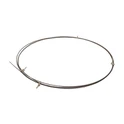
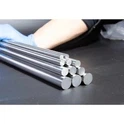
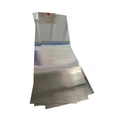
1. Core Physical And Chemical Properties Of Pure Tungsten & Industrial Application Potential
In modern industrial manufacturing, pure tungsten materials have become the material of choice for numerous industries due to their exceptional physical and chemical properties. As a professional tungsten alloy manufacturer, we understand the strategic value of pure tungsten in industrial applications.
Pure tungsten is distinguished by the industry's highest melting point (3,422°C) and the highest density among base metals (19.3 g/cm³), making it an essential material for high-precision industries including electronics manufacturing, semiconductors, photovoltaics, and medical devices. The extreme melting point characteristic enables pure tungsten to maintain structural stability in extreme temperature environments, while its high density provides reliable shielding and balancing functionality.
From a chemical stability perspective, pure tungsten exhibits superior corrosion resistance at room and moderate temperatures, resisting reactions with industrial acids, bases, and other corrosive solutions. This property makes pure tungsten the ideal choice for vacuum metallurgy, crystal growth furnaces, and high-temperature reactors. Additionally, pure tungsten demonstrates relatively strong electrical conductivity and thermal conductivity, meeting the stringent thermal management requirements of electronic devices.
For B2B manufacturers, selecting high-quality pure tungsten directly impacts the reliability and market competitiveness of final products. Our pure tungsten products comply with international standards (ASTM B760, ISO 4402), ensuring every batch meets strict customer technical requirements.
2. High-End Demand Analysis: Electronics Manufacturing Industry's Tungsten Requirements
The rapid growth of the global electronics manufacturing industry directly drives increased demand for pure tungsten materials. Particularly in semiconductor manufacturing, LED packaging, flat display production, and new energy battery sectors, tungsten applications are expanding rapidly.
In semiconductor manufacturing, pure tungsten primarily serves as interconnect layers and gate materials in chips, with its low resistivity ensuring high-efficiency signal transmission. The LED industry utilizes pure tungsten's exceptional melting point and thermal conductivity properties for LED chip substrates and heat dissipation structures. With 5G communication infrastructure deployment, high-frequency and high-power electronic devices are experiencing exponential growth in pure tungsten demand.
The vacuum metallurgy sector also shows continuously increasing tungsten demand. In vacuum coating, vacuum sintering, and similar processes, pure tungsten crucibles, boats, and fixtures must operate stably in high-temperature vacuum environments, directly affecting product yield and production efficiency. This makes procurement of high-quality pure tungsten materials a critical factor in corporate competitiveness.
Medical imaging devices (such as CT tube anodes) and aerospace sectors are also experiencing rapid growth in tungsten applications. These applications demand extremely high reliability standards, as any material defects could result in severe economic losses.
3. Performance Comparison: Pure Tungsten Vs. Alternative Materials & Cost Analysis
In procurement decisions, industrial purchasing departments often must weigh pure tungsten against alternative materials such as molybdenum, tantalum, and nickel. The following provides detailed comparisons:
- 【Melting Point and High-Temperature Stability】 Pure tungsten's melting point of 3,422°C far exceeds molybdenum (2,617°C) and nickel (1,455°C). For applications requiring ultra-high temperature stability, pure tungsten is the only reasonable choice. Although the price is higher, long-term usage costs are often lower due to extended product lifespan and reduced failure rates.
- 【Density and Shielding Performance】 With a density of 19.3 g/cm³, pure tungsten is among the highest density common metals. In X-ray and gamma-ray shielding applications, pure tungsten achieves equivalent shielding effects with significantly smaller size and weight, providing obvious advantages in space-constrained applications such as medical devices and aerospace components.
- 【Cost-Performance Analysis】 While pure tungsten unit costs are higher, when considering total lifecycle costs (including failure rates, maintenance costs, and downtime losses), pure tungsten often proves most economical. Particularly in industries where reliability is paramoun