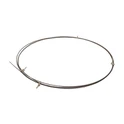
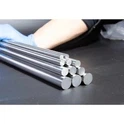
Tungsten Rod, Bar and Wire Buyer's Guide 2026: How to Specify and Source Wrought Pure Tungsten in W1, WAL1, WLa and WCe
Wrought tungsten rod is one of those materials that seems interchangeable until it fails. Two suppliers quote the same diameter, the same grade and the same price; the first bar machines cleanly and holds its shape in service, the second develops surface cracks during grinding and bows after the first heating cycle. The chemistry on the certificate is identical. What differs is the manufacturing route - how the powder was sintered, how the bar was forged or swaged, how it was annealed, and how residual internal stress was handled.
That is the real risk in tungsten rod and wire sourcing: not availability, but process control. Tungsten is a brittle, abrasive, hard-to-work metal, and the difference between a good bar and a bad one is invisible until it reaches your shop. This guide explains how international buyers should specify pure tungsten rod, bar and wire, how the four common grades differ, what the manufacturing routes do to the metal, and what to verify in a tungsten rod manufacturer before committing to a production order.
It is written by the engineering and export team at Zhuzhou Kingdon Industrial & Commercial Co., Ltd. (ZZKD), which has manufactured and exported tungsten and molybdenum materials from Zhuzhou, Hunan - the centre of China's non-ferrous metals industry - since 2004.
Why Wrought Tungsten Rod and Wire Are Chosen
Tungsten holds the highest melting point of any non-alloyed metal - 3,422 °C (6,192 °F) - the highest tensile strength of any metal in pure form, and the lowest vapour pressure above 650 °C. In rod and wire form those properties translate into specific jobs: electrodes that must survive an arc, filaments that must hold their shape at white heat, furnace supports that must not creep, and lead wires that must not sag in a lamp.
Two further properties matter for wire. Tungsten has the highest tensile strength of any pure metal, which is what allows a drawn tungsten wire to carry its own weight and hold a coil shape at incandescence. And its electrical resistivity of approximately 52.8 nΩ·m at 20 °C, rising sharply with temperature, is the basis of tungsten's use as a heating element and a filament: the wire heats itself, and its resistance rises as it does so.
The trade-off is ductility. Pure tungsten has a ductile-to-brittle transition, and below the recrystallisation temperature its behaviour is strongly dependent on grain structure and internal stress. A forged or swaged bar - worked while hot, then stress-relieved - is far more forgiving than a sintered blank of the same grade. That is why the manufacturing route, not just the grade, belongs on the purchase order.
|
Property |
Pure Tungsten (W1, min. 99.95% W) |
Practical Meaning for Rod and Wire Buyers |
|
Melting point |
3,422 °C (6,192 °F) |
Highest of any non-alloyed metal |
|
Density |
19.25 g/cm³ |
Verify against the certificate; a low figure signals porosity |
|
Tensile strength |
Highest of any metal in pure form |
The basis of tungsten wire and filament performance |
|
Electrical resistivity |
≈52.8 nΩ·m at 20 °C |
Rises steeply with temperature - design for hot resistance |
|
Coefficient of thermal expansion |
≈4.5 × 10⁻⁶/K (25 °C) |
Low thermal stress in electrode and support use |
|
Recrystallisation |
≈1,200–1,400 °C |
Above this, drawn wire and swaged rod become brittle |
|
Hardness |
≈2570 MPa Brinell |
Abrasive to machine - specify ground or straightened condition |
Rod, Bar and Wire: Sorting the Terminology
Before a quotation can be compared, buyer and supplier have to mean the same thing by the words. In wrought tungsten, the product names are separated by diameter and by manufacturing method, and suppliers do not always draw the lines in the same place.
|
Product Name |
Typical Diameter |
How It Is Made |
Typical Use |
|
Tungsten wire |
0.3 – 3.0 mm (finer on request) |
Drawn, then annealed |
Filaments, electrodes, lead and support wire, heating elements |
|
Straightened bar / rod |
0.5 – 3.0 mm |
Drawn then straightened |
Electrodes, probe needles, where straightness is critical |
|
Swaged rod |
3.0 – 25 mm |
Rotary swaging after sintering |
General-purpose wrought condition for machining |
|
Forged bar |
2.5 – 100 mm |
Forging, worked hot |
Largest diameters; intended for further machining |
|
Ground bar |
1.0 – 50 mm |
Forged or swaged, then centreless-ground |
Diameter is a functional fit - electrodes and vacuum hardware |
|
Lathed bar |
≥ 20 mm |
Peeled / machined |
Removes surface defects on heavy sections |
The practical rule: state the diameter, the length, the tolerance and the surface condition - not just the word "rod". A quotation for "tungsten rod" that does not distinguish between a 100 mm forged bar and a 1 mm straightened wire is not a real quotation, because the two come off completely different production routes with different cost structures and different achievable tolerances.
The Four Manufacturing Routes and What They Do to the Metal
Wrought tungsten goes through a sequence that begins with powder and ends with a finished bar or wire. Each step changes the material, and each step is a question worth asking a supplier about.
|
Stage |
What Happens |
Why It Matters to the Buyer |
|
Pressing and sintering |
Tungsten powder is pressed and sintered into a dense blank |
Controls the starting density and the internal porosity that could survive into the finished bar |
|
Hot working (forging / swaging / rolling) |
The sintered blank is reduced in section while hot |
Breaks down the grain structure and closes porosity; determines strength and ductility |
|
Drawing (wire) |
Rod is drawn through dies in successive reductions to wire diameter |
Sets diameter uniformity and surface finish; determines filament behaviour |
|
Annealing / stress relief |
Controlled heat treatment after working |
Relieves internal stress; too little leaves a bar that bows and cracks, too much causes recrystallisation and brittleness |
|
Straightening and grinding |
Mechanical straightening and centreless grinding to final tolerance |
Delivers the dimensional and straightness quality that reaches your shop |
Two consequences follow for buyers. First, a factory that controls the whole route can adjust it for your application - the annealing schedule for a TIG electrode is not the same as for a heating element. Second, a reseller that buys semi-finished stock cannot adjust anything. When you specify a wrought tungsten rod, you are in practice specifying a manufacturing process, and the only way to control the process is to buy from the people who run it.
Size Ranges and Tolerances
The table below reflects what ZZKD produces in-house. The tolerance column is the part most buyers under-specify, and it is the part that decides whether the bar fits your fixture without additional machining.
|
Product Form |
Diameter Range |
Tolerance |
Condition / Finish |
|
Tungsten wire |
Ø 0.3 – 3.0 mm (finer on request) |
± 0.02 mm |
Black or alkali-washed; unit weight per coil to requirement |
|
Straightened bar / rod |
Ø 0.5 – 3.0 mm |
± 0.03 mm |
Straightened after drawing |
|
Swaged rod |
Ø 3.0 – 25 mm |
± 0.1 mm |
Black or alkali-washed |
|
Forged bar |
Ø 2.5 – 100 mm |
± 1.0 mm |
Black surface; for further machining |
|
Lathed bar |
Ø ≥ 20 mm |
± 0.1 mm |
Machined / peeled |
|
Ground bar |
Ø 1.0 – 50 mm |
± (0.03 – 0.1) mm |
Ground, bright |
Two specifications deserve a separate line on the order even though they are not in the diameter column. Straightness matters wherever a rod is fed through a collet, a guide or a welding torch: specify it as a maximum run-out over the bar length, not as an adjective. And length tolerance matters for furnace elements and electrodes cut to a fixed span. Neither is implied by a diameter tolerance, and both cause rejected shipments when they are left out.
Tungsten Wire: Grades and What They Mean
Tungsten wire is supplied in a family of grades defined by dopant and by the drawing and annealing treatment, which together determine how the wire behaves at incandescence. The grade a buyer needs is decided by the application, not by price, because a wire specified for the wrong duty will either sag, break, or fail to strike an arc. The KW-series designations below are the ones ZZKD supplies in its pure tungsten wire range.
|
Grade |
Intended Duty |
Typical Application |
|
KW91 |
High shock resistance and high-temperature stability |
Filament and shock-resistant filament; high-temperature resistant devices |
|
KW71 |
Balanced performance for automotive duty |
Automotive lamp filament and other anti-shock devices |
|
KW61 |
Sag-resistant, for coiled-coil duty |
Coiled-coil filament |
|
KW31 |
General electrical and lighting duty |
Coiled-coil or trispiral CFL filament, incandescent filament and support, stranded wire, heater elements |
|
KW11 |
Conductive, non-emissive duty |
Electrode and lead wire |
Do not assume grades are interchangeable. A wire drawn for a coiled-coil filament has been processed to hold its shape at temperature; a wire drawn for an electrode has been processed for stable conduction. Substituting one for the other because the diameter matches is a common and expensive mistake. State the duty - filament, electrode, heater, support - and ask the supplier to confirm the grade that matches it, together with the diameter tolerance on the certificate.
For wire, three further specifications belong on the order: diameter tolerance (± 0.02 mm on ZZKD standard pure tungsten wire), surface condition (black or alkali-washed, and whether the wire is clean enough for vacuum service), and unit weight per coil, since coil weight affects handling, feed-ability and how much wire is lost at the end of a spool.
Purity and Standards: GB/T 3459 and GB/T 4187
The standards that apply to wrought tungsten are often quoted incorrectly, and getting them right is one of the fastest ways to demonstrate technical competence to a buyer. Three points are worth being precise about.
|
Product |
Standard |
Scope Note |
|
Tungsten bar |
GB/T 3459 (Tungsten Bar) |
Chinese national standard for wrought tungsten bar |
|
Tungsten bar and rod |
GB/T 4187 (Tungsten Bar and Rod) |
Covers tungsten bar and rod |
|
Tungsten plate, sheet and foil |
GB/T 3875 / ASTM B760 |
Flat product only - not bar or rod |
|
Tungsten-rhenium alloy wire |
GB/T 4184 |
Alloy wire - not pure tungsten |
|
Molybdenum-tungsten alloy wire |
GB/T 4183 |
Alloy wire - not pure tungsten |
|
Pure tungsten wire |
Customer specification / drawing |
No single national product standard; specify grade plus diameter tolerance |
Two errors appear frequently enough to be worth naming. First, ASTM B760 covers plate, sheet and foil only - it is not a bar or rod specification, and a supplier who claims "tungsten bar to ASTM B760" has not read the scope. Second, GB/T 4183 is a specification for molybdenum-tungsten alloy wire, not for pure tungsten wire. A purchase order that cites the wrong standard is not fatal on its own, but it tells an experienced buyer that the supplier is quoting from a template rather than from the material.
Purity should be written as a number, not an adjective. "Pure tungsten rod" is marketing language; "≥ 99.95% W, balance by difference, GB/T 3459" is a specification. ZZKD supplies standard pure tungsten rod and wire at ≥ 99.95% W, with the chemical composition reported element by element on the material certificate shipped with each lot.
Quality Points That Decide Whether Your Rod Survives
For wrought tungsten, five quality points decide whether a bar or wire performs in service. They are not all visible on a certificate, and that is precisely why they deserve to be written into the purchase order.
- Internal soundness. Porosity and inclusions that survive working become fracture origins under thermal or mechanical load. For heavy bar intended for electrodes or furnace parts, ask for ultrasonic inspection rather than visual inspection alone.
- Grain structure. The grain size and orientation produced by forging and swaging determine ductility. A coarse, recrystallised structure is brittle; a fine, worked structure is forgiving. Ask the supplier to describe the working ratio, not just the final dimension.
- Straightness. Critical for any bar fed through a collet or torch. Specify maximum run-out over the length, and confirm the measurement method.
- Surface condition. Surface cracks, laps and scale become stress raisers. Ground or lathed surfaces remove them; black surfaces may hide them.
- Diameter uniformity along the length. A bar within tolerance at both ends and out of tolerance in the middle will pass a spot check and fail in production. Ask how diameter is verified - gauge, micrometer, or full-length scan - for critical wire.
A supplier who can answer these five points in specific terms - with numbers and equipment, not adjectives - is a manufacturer. A supplier who answers with "our quality is guaranteed" is not, and the difference will show up in your shop rather than on the quotation.
Eight Applications That Drive Wrought Tungsten Demand in 2026
- Welding and plasma cutting - pure and doped tungsten electrodes for TIG welding and plasma torches, where arc stability and erosion resistance decide life.
- Lighting and electric light sources - filaments, coiled-coil filaments, support wire and lead wire in lamps, CFLs and specialty bulbs.
- High-temperature vacuum furnaces - heating elements, hearth supports, setting rods and structural parts that must not creep at temperature.
- Glass and glass-fibre industry - electrodes and components that operate in molten glass, where tungsten's resistance to glass attack is decisive.
- Electronics and vacuum devices - lead-out wires, support wires and electrodes in electron tubes and vacuum components.
- Electron microscopy and scientific instruments - electron-gun cathodes and filament assemblies in SEM and TEM instruments.
- Contact and electrode applications - tungsten contact and electrode parts where arc-erosion resistance is the primary requirement.
- Instrumentation and specialty parts - typing needles, probe needles and precision components where stiffness and temperature resistance both matter.
For buyers in the lighting and electronics supply chain, one point is worth stating plainly: tungsten wire is supplied to a duty, not just to a diameter. A wire that is perfectly adequate as a lead wire will fail immediately as a coiled-coil filament. If you are specifying wire for a lamp, an electron source or a heater, tell the supplier what the wire has to do at temperature, not only how thick it is.
How to Vet a Tungsten Rod Supplier: Five Questions
Price will not tell you whether a tungsten rod supplier can become a production partner. Process control, lot traceability and how a supplier behaves when something goes wrong are what decide it. These five questions separate a manufacturer from a reseller, and they take ten minutes to ask.
- "Do you sinter, forge, swage and draw yourself, or buy semi-finished stock?" A factory that controls the whole route can adjust annealing and working for your application. A reseller cannot. Ask for the equipment list.
- "Will the certificate cover the actual lot you are shipping?" A generic datasheet is not a certificate. The document must reference the heat or lot number and report chemistry element by element.
- "What is the minimum order quantity for a first article?" If the answer is a full production batch, you cannot validate diameter, straightness and surface before spending real money. An MOQ of 1 piece or 1 kilogram removes that risk.
- "Can you hold the quoted diameter, straightness and length tolerance in production - not just on a sample?" Ask for the real capability at the ends of the size range, where it is hardest to hold.
- "What happens if the shipment is out of specification?" Ask how replacement and rework are handled. The answer reveals more about the supplier than the unit price does.
About ZZKD: The Manufacturer Behind This Guide
Zhuzhou Kingdon Industrial & Commercial Co., Ltd. (ZZKD) was founded in 2004 and has spent more than 20 years developing, producing and selling high-performance tungsten and molybdenum materials. The company is based in Zhuzhou, Hunan, and operates a factory covering 10,000 m², with in-house equipment including sintering furnaces, swaging machines, forging and hot-rolling equipment, drawing benches, grinding machines, CNC machining centres and cutting equipment.
Several of ZZKD's production staff have more than 35 years of hands-on experience, and the engineering team averages over 30 years in the refractory metals field. That depth is why the company can do what trading companies cannot: recommend a grade, an annealing condition or a surface finish for a specific application, and then hold the tolerance across a repeat order.
ZZKD exports to buyers in the USA, UK, Germany, Poland, the Czech Republic, Slovenia, India, Singapore, Japan, Brazil and other markets, and reports a record of no customer complaints since 2004, with four companies in the USA and UK purchasing continuously for more than ten years. Products ship in standard export packing - carton and plywood case, typically around 20–25 kg per box - with material certificates issued per batch. Payment is by T/T or L/C, and standard lead time is 10–20 working days.
For pure tungsten rod, bar and wire, ZZKD supplies forged, swaged, lathed, straightened and ground product in W1, WAL1, WLa and WCe grades, with diameters from 0.3 mm to 100 mm, MOQ from 1 piece or 1 kilogram, free samples, and technical quotations returned within 24 hours.
OEM and ODM service is standard. ZZKD manufactures to customer drawing, develops custom grades, diameters, surface conditions and packaging on request, and supplies wholesale and bulk quantities to importers, distributors, welding-supply houses and equipment builders - including private-label packaging for buyers who resell under their own brand. If you source tungsten rod as an OEM supplier rather than as an end user, state your annual volume and delivery schedule in the enquiry and the engineering team will structure the quotation accordingly.
FAQ
Q: What is the difference between tungsten rod, tungsten bar and tungsten wire?
A: The distinction is diameter and manufacturing method. Wire is drawn to roughly 0.3–3.0 mm; straightened bar is drawn and straightened in the same range; swaged rod is 3.0–25 mm; and forged bar runs from 2.5 mm to 100 mm. Because suppliers draw these boundaries differently, always specify diameter, tolerance, length and surface condition on the enquiry rather than relying on the product name.
Q: Which standard applies to tungsten rod and bar?
A: Wrought tungsten bar is covered by GB/T 3459, with GB/T 4187 covering tungsten bar and rod. Note that ASTM B760, often quoted for tungsten, covers plate, sheet and foil only and does not apply to bar or rod. Pure tungsten wire has no single national product standard, so it is specified by grade and diameter tolerance against the customer drawing.
Q: What do the KW grades of tungsten wire mean?
A: The KW-series designations describe the duty the wire is drawn for. KW91 is for high-temperature and shock-resistant filament duty, KW71 for automotive filament, KW61 for coiled-coil filament, KW31 for general lighting and electrical use, and KW11 for electrode and lead wire. Grades are not interchangeable even at the same diameter, because the drawing and annealing treatment differs.
Q: Can pure tungsten rod be machined into custom parts?
A: Yes, but tungsten is hard and abrasive, so grinding and carbide or CBN tooling are normally required. Buying the bar already ground or lathed to diameter reduces the machining burden in your shop, and machining at the mill keeps tolerance control and lead time in one factory rather than being subcontracted.
Q: What purity and tolerance should I specify for pure tungsten rod?
A: Specify a number, not a word: minimum 99.95% W (by difference) is the standard industrial grade, with trace elements reported individually on the certificate. For dimensions, state the diameter and its tolerance band, plus straightness and length tolerance if the bar is fed through a collet, guide or torch - neither is implied by a diameter tolerance alone.
Q: What is the minimum order quantity and lead time for tungsten rod and wire?
A: ZZKD accepts orders from 1 piece or 1 kilogram and provides free samples so buyers can verify diameter, straightness, surface and chemistry before committing to production. Standard lead time is 10–20 working days depending on specification; quotations are returned within 24 hours.