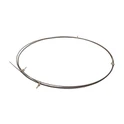
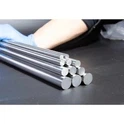
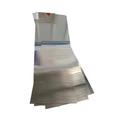
Molybdenum, an element with unique properties, plays a vital role in numerous industrial sectors. Its applications span the steel industry, electronics, automotive painting, and high-temperature component manufacturing.
In the steel industry, molybdenum, as an alloying element, significantly improves steel's strength, especially its high-temperature strength and toughness, while also enhancing its corrosion resistance in acidic and alkaline solutions and liquid metals. Molybdenum also improves steel's wear resistance, hardenability, weldability, and heat resistance, and is an excellent carbide-forming element.
In the electronics and electrical fields, molybdenum, due to its excellent electrical conductivity and high-temperature properties, as well as its linear expansion coefficient similar to that of glass, is widely used in the manufacture of components such as spiral filaments and lead wires in light bulbs. Furthermore, molybdenum wire, used as an electrode wire in wire-cut electric discharge machines, efficiently cuts various steels and carbide materials, allowing for the production of complex parts. Its stable discharge machining helps improve mold precision.
In automotive painting, molybdenum is a key thermal spray material due to its high-temperature performance and strong steel bonding. The dense spray coating not only improves the wear resistance of the worn surface but also provides a porous surface suitable for lubricant impregnation. It is widely used to enhance the performance of worn components such as automotive piston rings and synchronizer rings, and can also be used to repair worn mechanical parts.
In the manufacturing of high-temperature components, molybdenum's high purity, high-temperature resistance, and low vapor pressure make it an ideal choice for high-temperature furnace heating elements and structural materials. Molybdenum wire heating is widely used in the production of tungsten, molybdenum, and cemented carbide. It can be used in hydrogen and decomposed ammonia to near melting point, and in nitrogen up to 2000°C. Molybdenum is also used in the manufacture of high-temperature structural materials such as guide channels and tubes in glass melting, reducing production costs.