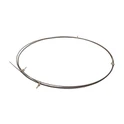
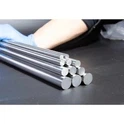
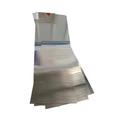
Tungsten is a silvery-white metal with high hardness and a high melting point. At room temperature, it is not corroded by air, making it relatively chemically stable. Tungsten has a wide range of industrial applications, including manufacturing filaments, high-speed cutting alloy steel, and ultra-hard molds, as well as optical and chemical instruments. Notably, China holds the world's largest tungsten reserves.
Non-ferrous Metals
Tungsten belongs to the category of non-ferrous metals. Unlike ferrous metals (such as iron, manganese, chromium, and their alloys), non-ferrous metals are generally stronger and harder, and have greater electrical resistance. These properties make tungsten important in the manufacture of cutting and mining tools.
Refractory Metals
Tungsten is one of the refractory metals with the highest melting point. Refractory metals are characterized by a high melting point, excellent high-temperature strength, and excellent corrosion resistance to molten alkali metals and vapors. Although tungsten is difficult to form at room temperature, its excellent high-temperature properties make it widely used in various fields, including metallurgy, chemicals, and electronics.
Rare Metals
Although tungsten is widely distributed in nature, its concentration is relatively low. Therefore, extracting tungsten requires specialized processes, such as organic solvent extraction and ion exchange. With the advancement of science and technology and metallurgical processes, the purity and properties of tungsten have been continuously improved, further expanding its application range. my country boasts abundant tungsten ore resources, and both production and export volumes rank among the highest in the world.
Strategic Metal
Due to its importance in the industrial sector and its relatively scarce resource, tungsten is considered a strategic metal. Its wide range of critical applications holds significant significance for the development and security of national industry.
Tungsten, a strategic metal, plays an indispensable role in contemporary high-tech new materials. Its unique physical and chemical properties make it a key component in electronic and optical materials, special alloys, new functional materials, and organometallic compounds. Although the amount of tungsten used is small, every bit counts. It is widely used in fields such as communications technology, computers, and aerospace development, and is crucial to the development and security of national industry.
Tungsten is a rare, high-melting-point metal with a silvery-white appearance resembling steel. It has a high melting point, low vapor pressure, and a slow evaporation rate. At room temperature, tungsten is chemically stable and unreactive with air and water. However, at temperatures between 80°C and 100°C, certain acids such as hydrochloric acid, sulfuric acid, and nitric acid (except hydrofluoric acid) will have a weak effect on tungsten. Particularly noteworthy is that in the presence of an oxidizing agent, the reaction between tungsten and alkali is more intense, forming tungstates.
Furthermore, at high temperatures, tungsten reacts with a variety of elements, such as oxygen, fluorine, and chlorine, but not with hydrogen. These diverse chemical reactions and unique physical properties have led to its widespread application in various fields.