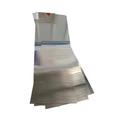
Molybdenum, the transition metal element number 42 on the periodic table, has attracted considerable attention for its unique chemical properties and wide range of applications. Its chemical symbol is Mo, and it exhibits a silvery-white metallic luster and is hard and durable. Molybdenum is stable at room temperature, impervious to air and chemically unreactive with hydrochloric or hydrofluoric acids. This makes it indispensable in numerous fields.
Molybdenum, the transition metal element number 42 on the periodic table, primarily exists as the naturally occurring mineral molybdenite (MoS2). This soft, black mineral has been known since ancient times, but its similarity to minerals such as lead, galena, and graphite has made it difficult to distinguish accurately. In Greek, "molybdos" means lead, and until the late 18th century, the two metals were even sold side by side in the European market as molybdenum ore.
In 1779, Scheele experimentally demonstrated that lead or graphite and molybdenum are distinct substances. He observed that nitric acid had no reaction with graphite, but reacted with molybdenum ore to produce a white powder. Furthermore, when nitric acid and an alkaline solution were boiled and crystallized, salt precipitated. Scheele deduced that this white powder was actually a metal oxide, molybdenum oxide. He tried mixing this oxide with charcoal and heating it at high temperatures, successfully producing raw molybdenum. He also discovered that heating molybdenum with sulfur produced even purer molybdenum.
In 1782, Swedish miner Elmo tried a novel method to extract molybdenum. He mixed charcoal, molybdic acid, and linseed oil to successfully isolate metallic molybdenum from molybdenum ore. He named it molybdenum, with the symbol Mo. This discovery was recognized by the renowned Swedish chemist Berzelius, who not only discovered elements such as cerium, selenium, silicon, tantalum, and thorium, but also conducted in-depth research on the properties of molybdenum.
When molybdenum metal burns in air, it emits a golden glow, and molybdenum ions in different oxidation states exhibit different colors. After over 100 years of exploration, it wasn't until 1893 that Mawson melted a mixture of carbon and molybdenum trioxide in an electric furnace, producing the first cast metal with a molybdenum content of 92%-96%.
Although molybdenum was discovered over 200 years ago, its large-scale development and utilization began in this century, particularly in recent decades. Molybdenum and its alloys have found widespread application in numerous fields due to their high strength, low coefficient of thermal expansion, excellent thermal and electrical conductivity, and outstanding corrosion and wear resistance.
Molybdenum is primarily used in alloy steel, stainless steel, tool steel, and cast iron, where demand for molybdenum is high. The addition of molybdenum significantly improves the corrosion resistance of stainless steel, while adding molybdenum to cast iron also enhances its strength and wear resistance. Furthermore, nickel-based superalloys containing 18% molybdenum have important applications in the aerospace industry. Their high melting point, low density, and low coefficient of thermal expansion make them ideal for manufacturing various high-temperature components.
Molybdenum is widely used in electronics, including in electronic devices such as electron tubes, transistors, and rectifiers. Pure molybdenum wire also has important applications in high-temperature furnaces, electrical discharge machining (EDM), and wire-cutting. Molybdenum is also used in the manufacture of radio and X-ray equipment, as well as in other alloy and chemical industries.
Adding molybdenum to alloy steels can further enhance their elastic limit, corrosion resistance, and permanent magnetic properties. Molybdenum oxide and molybdates play an important role as catalysts in the chemical and petroleum industries. Furthermore, molybdenum disulfide is a crucial lubricant in the aerospace and machinery industries. Its unique sulfur resistance enables it to catalyze the hydrogenation of carbon monoxide to alcohols under certain conditions.
The application of molybdenum is continuously expanding, now encompassing a wide range of sectors, including nuclear power and new energy. Molybdenum is also a trace element essential for plant growth and is crucial for plant survival. In agriculture, molybdenum is widely used in trace element fertilizers to provide essential nutrients for plants.
Molybdenum, an element that plays a vital role in industry and agriculture, also plays a role in the human body. The total amount of molybdenum in an adult's body is approximately 9 mg, with the liver and kidneys being the organs with the highest molybdenum concentrations. It's worth noting that Mo-99, a radioactive isotope of molybdenum, is used in hospitals to prepare Technetium-99. Technetium-99, a powerful radioactive isotope, is often used for imaging of internal organs. During imaging, Mo-99 is typically absorbed by aluminum oxide powder and stored in a relatively small container. As Mo-99 decays, it converts to Technetium-99, which is then used for medical diagnostics.
The discovery of molybdenum dates back to the 14th century, when it was first found in the crafting of Japanese samurai swords, ushering in its military applications. In 1891, the French company Snyder innovated by using molybdenum as an alloying element to produce armor plating containing molybdenum, leveraging its lower density (only half that of tungsten). This discovery led to molybdenum gradually replacing tungsten in many steel alloys. With the outbreak of World War I, the supply of ferrotungsten became scarce, and demand for tungsten increased dramatically, further driving the use of molybdenum in high-hardness and impact-resistant steels. Due to the increasing importance of molybdenum in the military, governments worldwide began to consider it a strategic metal. By the early 20th century, molybdenum's applications had expanded to include the manufacture of high-temperature resistant rocket artillery and the development of advanced materials such as tungsten and molybdenum alloys. Molybdenum was also widely used in high-quality components for warships, rockets, and high-end equipment.
Molybdenum alloys, non-ferrous alloys composed of molybdenum combined with other elements, have key components including titanium, zirconium, hafnium, tungsten, and rare earth elements. These alloys offer excellent thermal conductivity, good electrical conductivity, and low thermal expansion. They exhibit exceptional strength at high temperatures, ranging from 1100 to 1650°C, and offer superior processing properties compared to tungsten. Consequently, molybdenum alloys are widely used in a wide range of applications, including the manufacture of grids and anodes for electron tubes, support materials for electric light sources, die-casting and extrusion dies, and the construction of key spacecraft components.
However, with the end of World War I, demand for molybdenum plummeted. To address this challenge, the industry urgently needed to explore new applications. Fortunately, the new low-molybdenum alloy steel gained acceptance in the automotive industry, marking a new era in the research and development of molybdenum in areas such as steel. By the late 1930s, molybdenum was widely used as a raw material in various industries, providing strong support for the expansion of the market for molybdenum-containing tool steels. Post-World War II reconstruction efforts further promoted research and market development in molybdenum's industrial applications.
To this day, alloy steel, stainless steel, tool steel, and cast iron remain the primary applications of molybdenum. Nevertheless, with technological advancements and industrial development, we believe that molybdenum's applications will continue to expand, contributing further to the progress of human society.
Molybdenum, a key element, is primarily found in granite in the Earth's crust. Its mineral deposits are relatively simple, primarily consisting of sulfide ores. Given its essential role in military weaponry, major countries around the world have designated it as a strategic mineral reserve. Strategic mineral reserves are intended to ensure national security and to stockpile relatively scarce mineral resources in my country. Currently, ten countries worldwide have established comprehensive strategic mineral reserve systems. my country boasts abundant molybdenum reserves, totaling 8.6 million tons (measured in molybdenum), of which industrial reserves account for approximately 3.5 million tons, firmly ranking second globally. These resources are not only large and widely distributed, but also feature large-scale deposits and shallow, easily accessible ore bodies, profoundly impacting the global molybdenum market. North America also boasts abundant molybdenum resources. It is worth noting that my country's molybdenum resource control is more advanced than that of rare earths. The Ministry of Natural Resources is currently planning to designate molybdenum as a protected mineral, implementing total mining quota management and publishing corresponding mining quota targets. This move signals that molybdenum will become another special mineral, joining gold, tungsten, tin, antimony, and rare earths, to receive special protection and management from the state.