Who invented vacuum metalizing? This question has intrigued many in the industry, and as a Vacuum Metalizing supplier, I've delved deep into the history to uncover the answer. In this blog, we'll explore the origins of vacuum metalizing, its development over time, and how it has become an essential process in various industries today.
The Origins of Vacuum Metalizing
The concept of vacuum metalizing dates back to the early 20th century. One of the key figures in its development was Irving Langmuir, a renowned American chemist and physicist. Langmuir made significant contributions to the field of surface chemistry and was awarded the Nobel Prize in Chemistry in 1932.
In the 1910s, Langmuir was conducting experiments on the behavior of gases at low pressures. He discovered that by heating a metal wire in a vacuum, the metal atoms would evaporate and deposit onto nearby surfaces. This was the fundamental principle behind vacuum metalizing. However, at that time, the technology was still in its infancy, and practical applications were limited.
Another important pioneer in the field was John Strong, an American physicist. In the 1930s, Strong developed a technique for depositing thin metal films onto glass surfaces using vacuum evaporation. His work laid the foundation for the use of vacuum metalizing in optical applications, such as mirrors and lenses.
The Development of Vacuum Metalizing Technology
Over the next few decades, vacuum metalizing technology continued to evolve. In the 1940s and 1950s, the demand for high - quality metal coatings in the aerospace and electronics industries drove significant advancements. New materials and techniques were developed to improve the quality and efficiency of the process.
One of the major breakthroughs was the development of electron beam evaporation. This technique uses an electron beam to heat the metal source, allowing for more precise control of the evaporation process. Electron beam evaporation can achieve higher deposition rates and better film quality compared to traditional resistance heating methods.


In addition, the development of sputtering technology in the 1960s provided another alternative for vacuum metalizing. Sputtering involves bombarding a target material with ions to eject atoms, which then deposit onto the substrate. Sputtering can be used to deposit a wide range of materials, including metals, alloys, and ceramics, and is particularly suitable for depositing thin films with complex compositions.
Applications of Vacuum Metalizing
Today, vacuum metalizing has a wide range of applications across various industries.
Packaging Industry
In the packaging industry, vacuum metalized films are widely used for food, beverage, and cosmetic packaging. These films provide excellent barrier properties against oxygen, moisture, and light, which helps to extend the shelf life of products. They also offer an attractive metallic appearance, enhancing the visual appeal of the packaging.
Automotive Industry
The automotive industry uses vacuum metalizing for decorative and functional purposes. Decorative trim pieces, such as grilles and emblems, are often metalized to give them a high - end, shiny finish. Vacuum metalizing is also used to deposit thin metal films on automotive sensors and electronic components to improve their performance and durability.
Electronics Industry
In the electronics industry, vacuum metalizing is used to deposit conductive and insulating films on printed circuit boards (PCBs), semiconductor devices, and displays. These films play a crucial role in the electrical performance of the devices, such as providing electrical connections, reducing electromagnetic interference, and improving the display quality.
Our Role as a Vacuum Metalizing Supplier
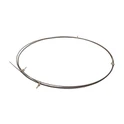
As a Vacuum Metalizing supplier, we are committed to providing high - quality products and services to our customers. We offer a wide range of vacuum metalizing solutions, including External Heater EVB Tungsten Filament and Tungsten Basket Tungsten Filament, which are essential components in the vacuum metalizing process.
Our team of experts has extensive experience in the field of vacuum metalizing and can provide customized solutions based on the specific requirements of our customers. We use the latest technology and equipment to ensure the quality and consistency of our products. Whether you need a small - scale prototype or a large - scale production run, we have the capabilities to meet your needs.
The Future of Vacuum Metalizing
Looking ahead, the future of vacuum metalizing looks promising. With the continuous development of new materials and applications, the demand for high - quality vacuum metalized products is expected to grow.
In the field of nanotechnology, vacuum metalizing can be used to deposit ultra - thin metal films with unique properties at the nanoscale. These films have potential applications in areas such as sensors, energy storage, and catalysis.
In addition, the increasing focus on sustainability in the industry is driving the development of more environmentally friendly vacuum metalizing processes. For example, the use of water - based coatings and the reduction of waste and energy consumption are becoming important considerations.
Contact Us for Your Vacuum Metalizing Needs
If you are looking for a reliable Vacuum Metalizing supplier, we would be delighted to hear from you. Whether you have a specific project in mind or just want to learn more about our products and services, please feel free to contact us. We are here to help you find the best vacuum metalizing solutions for your business. You can visit our website Vacuum Metalizing to learn more about our offerings.
References
- Langmuir, I. (1913). The constitution and fundamental properties of solids and liquids. Part I. Solids. Journal of the American Chemical Society, 35(9), 121–141.
- Strong, J. (1938). The vacuum evaporation of metals. Transactions of the American Institute of Electrical Engineers, 57(10), 725–730.
- Ohring, M. (2002). Materials science of thin films: deposition and structure. Academic Press.