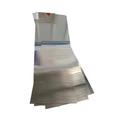
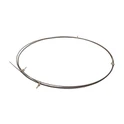
Hey there! As a supplier of pure tungsten metal, I've seen firsthand how cold working can have a huge impact on its properties. In this blog, I'm gonna break down what cold working is and how it changes pure tungsten.
Let's start with the basics. Cold working is a process where metal is deformed at a temperature below its recrystallization temperature. For pure tungsten, this usually means working it at room temperature or slightly above. The most common methods of cold working tungsten include rolling, drawing, and forging.
1. Mechanical Properties
Hardness and Strength
One of the most noticeable effects of cold working on pure tungsten is the increase in hardness and strength. When we subject tungsten to cold working, we're essentially introducing a ton of dislocations in its crystal structure. These dislocations interact with each other and get tangled up, making it harder for them to move. As a result, the metal becomes more resistant to deformation.
For example, when we draw pure tungsten into thin wires, the process of pulling the metal through a series of dies causes significant cold working. The wire becomes much stronger and harder compared to the original tungsten stock. This increase in strength is really useful in applications where high tensile strength is required, like in Tungsten Wire Rope. The cold - worked wire can withstand a lot of tension without breaking, making it ideal for heavy - duty lifting and rigging.
Ductility
On the flip side, cold working generally reduces the ductility of pure tungsten. Ductility is the ability of a metal to be stretched or deformed without fracturing. As we introduce more dislocations during cold working, the metal becomes more brittle. At a certain point, if we try to deform the cold - worked tungsten further, it's more likely to crack or break.
Let's say we have a piece of Tungsten Round Stock that has been heavily cold - rolled. If we then try to bend it at a sharp angle, it might crack instead of bending smoothly. This reduction in ductility is something we need to keep in mind when designing products with cold - worked tungsten. We might need to perform additional heat treatments to restore some of the ductility if the application requires it.
2. Microstructure Changes
Cold working also causes significant changes in the microstructure of pure tungsten. The original grains in the tungsten metal are deformed and elongated in the direction of the applied force. This creates a highly textured microstructure.
The elongated grains can have both positive and negative effects. On the positive side, the textured microstructure can give the tungsten better mechanical properties in the direction of the grain alignment. For example, in a cold - rolled tungsten sheet, the strength and stiffness are higher in the rolling direction. This can be beneficial in applications where the load is mainly applied in a specific direction.
However, the textured microstructure can also lead to anisotropy, which means that the properties of the metal vary depending on the direction. This can be a problem in applications where uniform properties are required. For instance, if we're using cold - worked tungsten in a component that experiences loads from multiple directions, the anisotropic properties might cause premature failure.
3. Electrical and Thermal Properties
Electrical Conductivity
Cold working can have a minor impact on the electrical conductivity of pure tungsten. In general, as the metal is cold - worked, the electrical conductivity decreases slightly. This is because the dislocations and the deformed microstructure create more obstacles for the flow of electrons.
The decrease in electrical conductivity is usually not a major issue in most applications. However, in some high - precision electrical applications, even a small change in conductivity can be a concern. For example, in Tungsten for Welding Stainless Steel, the electrical conductivity of the tungsten electrode affects the welding process. A slight decrease in conductivity might require adjustments to the welding parameters to ensure a proper weld.
Thermal Conductivity
Similar to electrical conductivity, cold working can also cause a small reduction in the thermal conductivity of pure tungsten. The deformed microstructure and the presence of dislocations impede the transfer of heat through the metal.
In applications where efficient heat transfer is crucial, such as in heat sinks or high - temperature components, this reduction in thermal conductivity might be a consideration. We might need to take steps to mitigate the effect, such as using a different manufacturing process or performing post - cold - working treatments to improve the thermal properties.
4. Surface Finish and Corrosion Resistance
Cold working can improve the surface finish of pure tungsten. The process of rolling or drawing the metal can result in a smoother and more uniform surface. This is beneficial in applications where a good surface finish is required, like in precision components or decorative items.
As for corrosion resistance, cold working doesn't seem to have a major negative impact on pure tungsten. Tungsten already has relatively good corrosion resistance due to the formation of a thin oxide layer on its surface. Cold working doesn't disrupt this protective layer significantly, so the corrosion resistance remains relatively stable.


Conclusion and Call to Action
In conclusion, cold working has a wide range of effects on the properties of pure tungsten metal. It can increase strength and hardness, but reduce ductility. It also causes changes in the microstructure, electrical and thermal properties, and can improve the surface finish. Understanding these effects is crucial when choosing the right manufacturing process for different applications.
If you're in the market for pure tungsten metal and want to discuss how cold - worked tungsten can meet your specific requirements, I'd love to hear from you. Whether you need Tungsten Wire Rope, Tungsten Round Stock, or Tungsten for Welding Stainless Steel, I can provide you with high - quality products and expert advice. Don't hesitate to reach out and start a conversation about your procurement needs.
References
- ASM Handbook, Volume 8: Mechanical Testing and Evaluation
- Metals Handbook Desk Edition, Third Edition