


As a trusted supplier of Tungsten Wire Rope, I've had numerous inquiries regarding the magnetic properties of this remarkable product. In this blog post, I'll delve into the scientific aspects of the magnetic characteristics of tungsten wire rope, exploring its behavior under different conditions and the factors that influence it.
Understanding Tungsten and Its Basic Properties
Tungsten, also known as wolfram, is a chemical element with the symbol W and atomic number 74. It is renowned for its extremely high melting point, which is the highest among all metals at 3422°C (6192°F). This property makes tungsten an ideal material for applications that require high - temperature resistance, such as in light bulb filaments and aerospace components.
Tungsten is also highly dense, with a density of 19.25 g/cm³, which is comparable to that of gold and uranium. In addition to its high melting point and density, tungsten has excellent tensile strength, making it suitable for use in wire ropes. These ropes are used in a variety of industries, including mining, construction, and manufacturing.

Magnetic Properties of Tungsten
Tungsten is considered a paramagnetic material. Paramagnetism is a form of magnetism whereby certain materials are weakly attracted by an externally applied magnetic field and form internal, induced magnetic fields in the direction of the applied magnetic field. This behavior is due to the presence of unpaired electrons in the atoms of the material.
In the case of tungsten, its electronic configuration leads to the existence of unpaired electrons. When placed in a magnetic field, these unpaired electrons align themselves with the external field, creating a weak magnetic moment. However, the magnetic susceptibility of tungsten is relatively low compared to ferromagnetic materials like iron, nickel, and cobalt.
The magnetic susceptibility of tungsten is approximately 6.8×10⁻⁵ at room temperature. This means that the magnetic response of tungsten is quite weak, and it requires a relatively strong external magnetic field to observe any significant magnetic effect.
Factors Affecting the Magnetic Properties of Tungsten Wire Rope
Purity of Tungsten
The purity of the tungsten used in the wire rope can significantly affect its magnetic properties. Impurities in the tungsten can introduce additional magnetic behavior. For example, if the tungsten contains small amounts of ferromagnetic impurities such as iron or nickel, the overall magnetic response of the wire rope may be enhanced. As a supplier of Tungsten Wire Rope, we ensure that our products have a high level of purity to maintain consistent magnetic properties.
Crystal Structure
The crystal structure of tungsten can also influence its magnetic behavior. Tungsten typically has a body - centered cubic (BCC) crystal structure at room temperature. Changes in the crystal structure, such as those induced by high - temperature processing or mechanical deformation, can affect the arrangement of electrons and thus the magnetic properties. For instance, some phase transitions in tungsten may lead to a change in the number of unpaired electrons, altering the magnetic susceptibility.
Temperature
Temperature plays a crucial role in the magnetic properties of tungsten. As the temperature increases, the thermal energy causes the unpaired electrons to become more randomly oriented. This reduces the alignment of the electrons with the external magnetic field, resulting in a decrease in the magnetic susceptibility. At very high temperatures, the magnetic response of tungsten becomes even weaker.
Applications Based on Magnetic Properties
The weak paramagnetic nature of tungsten wire rope has several practical applications. In industries where magnetic interference needs to be minimized, tungsten wire ropes can be used. For example, in scientific research equipment, such as particle accelerators and magnetic resonance imaging (MRI) machines, the use of tungsten wire ropes can help reduce unwanted magnetic fields and ensure accurate measurements.
In addition, the non - ferromagnetic nature of tungsten wire rope makes it suitable for use in environments where ferromagnetic materials may cause problems. For instance, in some chemical processing plants, ferromagnetic materials can react with certain chemicals or be affected by magnetic fields generated by electrical equipment. Tungsten wire ropes, with their weak magnetic properties, can be a better alternative in such situations.
Comparison with Other Tungsten Products
We also supply other tungsten products, such as Tungsten Round Stock and Wolfram Wire. While these products share some of the basic properties of tungsten, their magnetic properties can vary depending on their shape and manufacturing process.
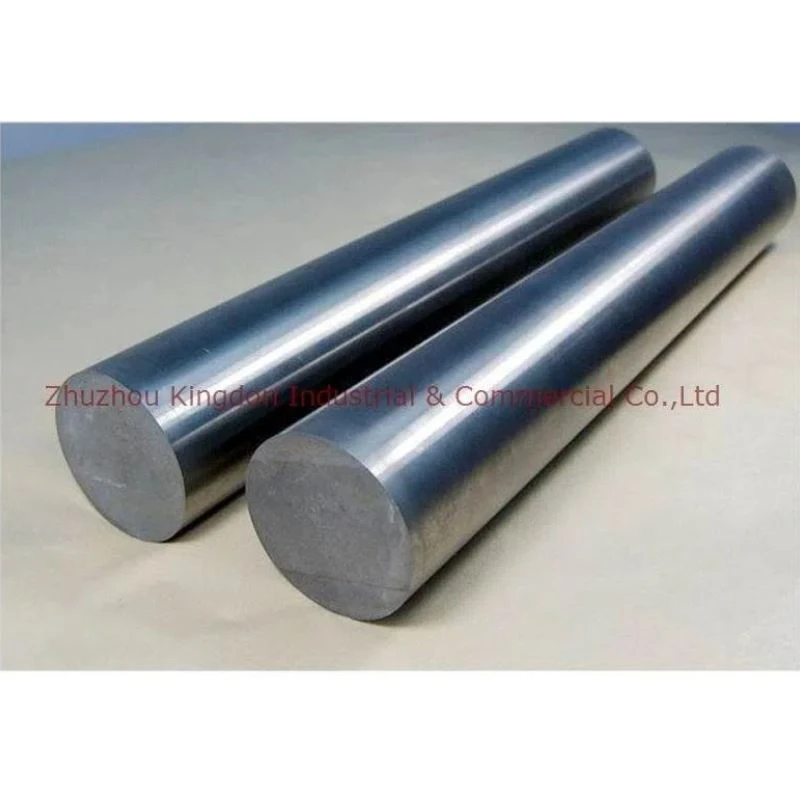
Tungsten round stock, which is a solid cylindrical piece of tungsten, may have a more uniform magnetic field distribution compared to wire rope. This is because the wire rope is made up of multiple strands, which can introduce some inhomogeneity in the magnetic response.
Wolfram wire, on the other hand, is a single - strand wire. Its magnetic properties are similar to those of tungsten wire rope in terms of being paramagnetic. However, the smaller cross - sectional area of the wire may result in a different magnetic behavior under certain conditions, such as when exposed to a very strong magnetic field.
Conclusion
In conclusion, tungsten wire rope is a paramagnetic material with weak magnetic properties. Its magnetic behavior is influenced by factors such as purity, crystal structure, and temperature. The weak paramagnetism of tungsten wire rope makes it suitable for applications where magnetic interference needs to be minimized.
As a supplier of high - quality tungsten wire rope, we are committed to providing products with consistent magnetic properties. Whether you are in the scientific research, chemical processing, or any other industry that requires the use of tungsten wire rope, we can offer you the best solutions.
If you are interested in our Tungsten Wire Rope or other tungsten products, we encourage you to reach out to us for a detailed discussion about your requirements. We are ready to assist you in finding the most suitable products for your specific applications.
References
- Kittel, C. (1996). Introduction to Solid State Physics. John Wiley & Sons.
- Ashcroft, N. W., & Mermin, N. D. (1976). Solid State Physics. Holt, Rinehart and Winston.
- Handbook of Chemistry and Physics. CRC Press.


