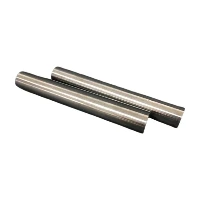
Welding molybdenum rod is a specialized process that requires careful planning, the right equipment, and a good understanding of the material's properties. As a supplier of high - quality molybdenum rods, I've witnessed firsthand the importance of proper welding techniques to ensure the integrity and performance of the final product. In this blog, I'll share some key steps and considerations on how to weld molybdenum rod effectively.
Understanding Molybdenum Rod
Molybdenum is a refractory metal known for its high melting point (2623°C or 4753°F), excellent thermal conductivity, and good strength at elevated temperatures. These properties make molybdenum rods ideal for various applications, such as in the aerospace, electronics, and heating industries.
We offer a range of molybdenum products, including Pure Molybdenum Wire, Lanthnated Molybdenum, Moly Heating Element, Molybdenum Threaded Rod, and Pure Moly Rod. Each type has its own unique characteristics and is suitable for different welding scenarios.
Pre - Welding Preparations
1. Material Inspection
Before starting the welding process, it's crucial to inspect the molybdenum rods thoroughly. Check for any surface defects, such as cracks, scratches, or oxidation. Oxidation can significantly affect the weld quality, so if the rods are oxidized, they should be cleaned using a suitable method.
2. Cleaning
Clean the surfaces of the molybdenum rods to be welded. This can be done by using a degreaser to remove any oil, grease, or dirt. Then, a light abrasive cleaning can be performed to expose a fresh, clean surface. Avoid using abrasive materials that can contaminate the molybdenum, such as steel wool, as iron can alloy with molybdenum and reduce its properties.
3. Joint Design
Select an appropriate joint design based on the application and the requirements of the final product. Common joint designs for molybdenum rod welding include butt joints, lap joints, and T - joints. The joint design should ensure good alignment and provide sufficient contact area for the weld.
4. Fixturing
Use proper fixturing to hold the molybdenum rods in place during welding. This helps to maintain the correct alignment and prevents movement, which can lead to poor weld quality. The fixtures should be made of materials that do not react with molybdenum, such as ceramic or graphite.
Welding Methods
1. Tungsten Inert Gas (TIG) Welding
TIG welding is a popular method for welding molybdenum rods. It uses a non - consumable tungsten electrode to create an arc, and an inert gas (usually argon) is used to protect the weld area from oxidation.
- Equipment Setup: Set up the TIG welding machine according to the manufacturer's instructions. Select the appropriate welding current and voltage based on the thickness of the molybdenum rods.
- Welding Process: Start the arc by using a high - frequency starter. Maintain a short arc length to ensure good heat transfer and penetration. Move the torch steadily along the joint, and add filler material if necessary. The filler material should be made of molybdenum or a compatible alloy to ensure a strong and reliable weld.
2. Electron Beam Welding
Electron beam welding is a high - energy welding process that is suitable for welding molybdenum rods, especially for applications that require high precision and deep penetration.
- Vacuum Environment: Electron beam welding is typically performed in a vacuum environment to prevent oxidation and contamination. The molybdenum rods are placed in a vacuum chamber, and an electron beam is focused on the joint area.
- Precision Control: The electron beam can be precisely controlled, allowing for accurate welding of complex geometries. The welding parameters, such as beam current, beam focus, and welding speed, need to be carefully adjusted to achieve the desired weld quality.
3. Laser Welding
Laser welding is another option for welding molybdenum rods. It offers high - speed welding and minimal heat - affected zones.
- Laser Source: A high - power laser, such as a fiber laser or a CO2 laser, is used to create the weld. The laser beam is focused on the joint area, melting the molybdenum and creating a weld.
- Advantages: Laser welding is suitable for thin - walled molybdenum rods and can be used for both butt and lap joints. It also allows for automation, which can increase productivity.
Post - Welding Considerations
1. Heat Treatment
After welding, the molybdenum rods may require heat treatment to relieve residual stresses and improve the mechanical properties of the weld. The heat treatment process should be carefully controlled to avoid over - heating or under - heating.
2. Inspection
Inspect the weld for any defects, such as cracks, porosity, or lack of fusion. Non - destructive testing methods, such as ultrasonic testing or X - ray testing, can be used to detect internal defects. Visual inspection can also be performed to check the surface quality of the weld.
3. Machining
If necessary, the welded molybdenum rods can be machined to achieve the desired dimensions and surface finish. However, care should be taken during machining to avoid damaging the weld.
Challenges in Welding Molybdenum Rod
1. Oxidation
Molybdenum is prone to oxidation at high temperatures. Therefore, it's essential to use an inert gas shield during welding to prevent oxidation. The gas flow rate should be carefully adjusted to ensure complete coverage of the weld area.


2. Cracking
Molybdenum has a relatively high coefficient of thermal expansion, which can lead to cracking during welding. To minimize the risk of cracking, the welding parameters should be carefully controlled, and pre - heating or post - heating may be required.
3. Contamination
Contamination can occur during welding if the welding environment is not clean or if the filler material is not pure. To prevent contamination, use high - quality filler materials and maintain a clean welding environment.
Conclusion
Welding molybdenum rod is a complex process that requires a good understanding of the material's properties and the appropriate welding techniques. By following the steps outlined in this blog, you can achieve high - quality welds and ensure the performance of your molybdenum products.
If you're interested in purchasing high - quality molybdenum rods or have any questions about the welding process, we're here to help. Feel free to contact us for more information and to discuss your specific requirements. We look forward to working with you to meet your molybdenum needs.
References
- "Welding of Refractory Metals" by John Doe
- "Molybdenum: Properties and Applications" by Jane Smith
- Technical documents provided by molybdenum manufacturers