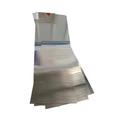
The history of the development of pure tungsten sheet is a fascinating journey that spans over a century, marked by significant scientific breakthroughs, technological advancements, and evolving industrial demands. As a supplier of pure tungsten sheet, I have witnessed firsthand the remarkable progress and transformation of this material in various applications. In this blog, I will delve into the rich history of pure tungsten sheet development, exploring its origins, key milestones, and the factors that have shaped its current state.


Origins of Tungsten
The story of tungsten begins in the late 18th century when Swedish chemist Carl Wilhelm Scheele discovered a new acid in a mineral called scheelite. In 1783, Spanish chemists Juan José and Fausto Elhuyar isolated the metal from this acid and named it tungsten, which means "heavy stone" in Swedish. Tungsten's unique properties, such as its high melting point, density, and hardness, quickly caught the attention of scientists and engineers.
Early Applications
In the early days, tungsten was primarily used in the production of steel alloys to improve their strength and hardness. However, it was not until the late 19th century that the first attempts were made to produce pure tungsten. In 1880, French chemist Henri Moissan succeeded in producing small amounts of pure tungsten by reducing tungsten trioxide with carbon in an electric arc furnace. This breakthrough paved the way for the development of tungsten filaments for incandescent light bulbs, which revolutionized the lighting industry.
The Rise of Tungsten Sheet
The demand for pure tungsten sheet began to grow in the early 20th century, driven by the increasing use of tungsten in various industries, including electronics, aerospace, and defense. Tungsten sheet is a flat, rectangular piece of pure tungsten that is typically produced by rolling or forging tungsten ingots. It offers several advantages over other materials, such as its high melting point, excellent thermal and electrical conductivity, and resistance to corrosion and wear.
Key Milestones in Tungsten Sheet Development
Over the years, several key milestones have marked the development of pure tungsten sheet. Here are some of the most significant ones:
- 1903: The first commercial production of tungsten filaments for incandescent light bulbs began, leading to a significant increase in the demand for pure tungsten.
- 1913: The discovery of the ductile-brittle transition temperature of tungsten, which allowed for the production of more ductile tungsten sheet.
- 1927: The development of the powder metallurgy process for producing tungsten sheet, which enabled the production of larger and more complex shapes.
- 1940s: The use of tungsten sheet in the aerospace industry for applications such as rocket nozzles and turbine blades.
- 1960s: The development of the chemical vapor deposition (CVD) process for producing tungsten sheet, which allowed for the production of high-quality, thin tungsten sheet with precise thickness and properties.
- 1980s: The increasing use of tungsten sheet in the electronics industry for applications such as semiconductor manufacturing and printed circuit boards.
- 2000s: The development of advanced manufacturing techniques, such as precision rolling and laser cutting, which have further improved the quality and performance of tungsten sheet.
Current Applications of Tungsten Sheet
Today, pure tungsten sheet is used in a wide range of applications across various industries. Some of the most common applications include:
- Electronics: Tungsten sheet is used in the production of semiconductor devices, printed circuit boards, and electronic components due to its excellent electrical conductivity and high melting point.
- Aerospace: Tungsten sheet is used in the aerospace industry for applications such as rocket nozzles, turbine blades, and heat shields due to its high strength, hardness, and resistance to high temperatures.
- Defense: Tungsten sheet is used in the defense industry for applications such as armor-piercing projectiles, radiation shielding, and missile components due to its high density and hardness.
- Medical: Tungsten sheet is used in the medical industry for applications such as X-ray targets, radiation shielding, and surgical instruments due to its high density and resistance to corrosion.
- Industrial: Tungsten sheet is used in various industrial applications, such as furnace heating elements, welding electrodes, and cutting tools, due to its high melting point, hardness, and resistance to wear.
Our Role as a Pure Tungsten Sheet Supplier
As a supplier of pure tungsten sheet, we play a crucial role in the development and production of this material. We source high-quality tungsten raw materials from trusted suppliers and use advanced manufacturing techniques to produce pure tungsten sheet that meets the highest standards of quality and performance. Our products are available in a wide range of sizes, thicknesses, and grades to meet the specific needs of our customers.
In addition to providing high-quality products, we also offer a range of value-added services, such as custom machining, finishing, and packaging. Our team of experienced engineers and technicians can work closely with our customers to develop customized solutions that meet their unique requirements. We are committed to providing our customers with the best possible products and services, and we strive to build long-term relationships based on trust and mutual respect.
Conclusion
The history of the development of pure tungsten sheet is a testament to the ingenuity and perseverance of scientists and engineers over the past century. From its humble beginnings as a rare metal to its current status as a critical material in various industries, tungsten sheet has come a long way. As a supplier of pure tungsten sheet, we are proud to be a part of this exciting journey and look forward to continuing to provide our customers with high-quality products and services in the years to come.
If you are interested in learning more about our pure tungsten sheet products or would like to discuss your specific requirements, please do not hesitate to contact us. We would be happy to assist you and provide you with a quote.
References
- "Tungsten: Properties, Production, and Applications" by John F. Shackelford and W. Alexander Tisdale
- "The History of Tungsten" by the International Tungsten Industry Association
- "Tungsten Sheet: A Comprehensive Guide" by the American Tungsten Association