As a supplier of pure tungsten metal, I've had the privilege of witnessing the remarkable properties of this extraordinary material up close. One of the most fascinating aspects of pure tungsten is its friction characteristics, which play a crucial role in a wide range of applications. In this blog post, I'll delve into the intricacies of tungsten's friction behavior, exploring its unique properties and the factors that influence them.
Understanding Friction in Pure Tungsten
Friction is a fundamental force that occurs when two surfaces come into contact and slide against each other. It can have both positive and negative effects, depending on the application. In some cases, friction is desirable, as it provides traction and allows for the transfer of energy. In other cases, it can be a hindrance, causing wear and tear on components and reducing efficiency.


Pure tungsten exhibits several unique friction characteristics that make it an ideal material for many high-performance applications. One of the most notable properties of tungsten is its high hardness. With a Mohs hardness of 7.5, tungsten is one of the hardest metals known to man. This hardness allows tungsten to resist deformation and wear, even under extreme conditions. As a result, tungsten components can maintain their shape and integrity over long periods of time, reducing the need for frequent replacement.
Another important factor that contributes to tungsten's friction characteristics is its low coefficient of friction. The coefficient of friction is a measure of the resistance to sliding between two surfaces. A low coefficient of friction indicates that the surfaces slide easily against each other, while a high coefficient of friction indicates that the surfaces have a greater tendency to stick together. Tungsten has a relatively low coefficient of friction, which means that it can reduce the amount of energy lost due to friction. This makes tungsten an ideal material for applications where energy efficiency is a priority, such as in bearings, gears, and other mechanical components.
In addition to its hardness and low coefficient of friction, tungsten also has excellent thermal conductivity. Thermal conductivity is a measure of the ability of a material to conduct heat. Tungsten has a high thermal conductivity, which means that it can dissipate heat quickly and efficiently. This property is particularly important in applications where high temperatures are generated, such as in cutting tools and electrical contacts. By dissipating heat quickly, tungsten can prevent overheating and reduce the risk of damage to the component.
Factors Affecting Tungsten's Friction Characteristics
While tungsten has many desirable friction characteristics, its behavior can be influenced by a variety of factors. One of the most important factors is the surface finish of the tungsten component. A smooth surface finish can reduce the coefficient of friction and improve the wear resistance of the component. On the other hand, a rough surface finish can increase the coefficient of friction and cause the component to wear more quickly. Therefore, it's important to ensure that the surface finish of tungsten components is carefully controlled during the manufacturing process.
Another factor that can affect tungsten's friction characteristics is the presence of contaminants on the surface of the component. Contaminants such as dirt, oil, and grease can increase the coefficient of friction and cause the component to wear more quickly. Therefore, it's important to keep tungsten components clean and free from contaminants. This can be achieved through proper cleaning and maintenance procedures, as well as by using protective coatings to prevent the accumulation of contaminants.
The operating conditions can also have a significant impact on tungsten's friction characteristics. For example, high temperatures can cause the coefficient of friction to increase, while low temperatures can cause it to decrease. Similarly, high pressures can increase the coefficient of friction, while low pressures can decrease it. Therefore, it's important to consider the operating conditions when selecting tungsten components for a particular application.
Applications of Tungsten's Friction Characteristics
The unique friction characteristics of pure tungsten make it an ideal material for a wide range of applications. One of the most common applications of tungsten is in cutting tools. Tungsten carbide, a compound made from tungsten and carbon, is one of the hardest materials known to man. It's used in a variety of cutting tools, including drills, saws, and milling cutters. The high hardness and low coefficient of friction of tungsten carbide allow it to cut through tough materials with ease, while its excellent wear resistance ensures that the cutting edge remains sharp for a long time.
Another important application of tungsten's friction characteristics is in electrical contacts. Electrical contacts are used to connect electrical circuits and allow the flow of electricity. Tungsten's high hardness, low coefficient of friction, and excellent thermal conductivity make it an ideal material for electrical contacts. It can withstand high temperatures and pressures without deforming or wearing out, ensuring reliable electrical performance over long periods of time.
Tungsten is also used in bearings and other mechanical components. The low coefficient of friction of tungsten allows it to reduce the amount of energy lost due to friction, improving the efficiency of the mechanical system. In addition, tungsten's high hardness and wear resistance make it an ideal material for components that are subject to high loads and stresses.
Conclusion
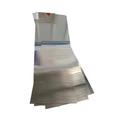
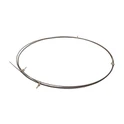
In conclusion, the friction characteristics of pure tungsten are truly remarkable. Its high hardness, low coefficient of friction, and excellent thermal conductivity make it an ideal material for a wide range of high-performance applications. As a supplier of pure tungsten metal, I'm proud to offer high-quality tungsten products that meet the needs of our customers. Whether you're looking for Tungsten Buck Sheet, Wolfram Wire, or other tungsten products, we have the expertise and resources to provide you with the solutions you need.
If you're interested in learning more about our pure tungsten products or have any questions about their friction characteristics, please don't hesitate to contact us. We're always happy to help and look forward to discussing your specific requirements. Let's work together to find the perfect tungsten solution for your application.
References
- ASM Handbook, Volume 2: Properties and Selection: Nonferrous Alloys and Special-Purpose Materials. ASM International.
- Tungsten: Properties, Chemistry, Technology of the Element, Alloys, and Chemical Compounds. Edited by R. Kieffer, F. Benesovsky, and E. Lassner. Springer-Verlag.