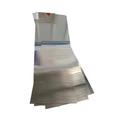
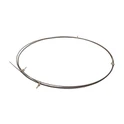
Hey there, fellow industry enthusiasts! I'm a supplier of Pure Tungsten Sheet, and today, I'm stoked to dive into a super interesting topic: how the purity of pure tungsten sheets affects their properties.
Let's start with a bit of background. Tungsten is one heck of a remarkable metal. It's got an insanely high melting point, great density, and some other cool properties that make it a top pick in many industries. When we talk about pure tungsten sheets, purity plays a huge role in determining how they perform.
Physical Properties
Melting Point
First up, the melting point. Tungsten already holds the crown for having the highest melting point among all metals. But guess what? The purer the tungsten sheet, the closer it gets to its theoretical melting point. Impurities in the sheet act like little disruptions in the atomic structure. They weaken the bonds between the tungsten atoms, making it easier for the metal to start melting.
For example, if you're using a less pure tungsten sheet in a high - temperature application, say a furnace component, it might start to deform or melt at a lower temperature than expected. And that's a big no - no because it can lead to equipment failure and all sorts of headaches. On the other hand, a high - purity Pure Tungsten Sheet can withstand those extreme temperatures like a champ, making it ideal for applications where heat is a major factor.
Density
Density is another key physical property affected by purity. Pure tungsten has a very specific density. As impurities get introduced, the density can deviate from this ideal value. Impurities often have different densities compared to tungsten. So, when they're mixed in, they can either increase or decrease the overall density of the sheet.
In applications where precise weight and density are crucial, such as in aerospace components or radiation shielding, a change in density can be a real problem. A high - purity tungsten sheet ensures that the density is consistent and within the required specifications, which is essential for the proper functioning of these high - tech applications.
Mechanical Properties
Hardness
Hardness is an important mechanical property, especially when it comes to machining and wear resistance. Purer tungsten sheets tend to be harder. The reason is simple: impurities can act as weak points in the metal's structure. When you try to deform or cut the sheet, these weak points can cause the material to give way more easily.
In a high - purity tungsten sheet, the atomic structure is more uniform, and there are fewer of these weak spots. This means that the sheet can better resist scratching and abrasion. For example, if you're using tungsten sheets in a manufacturing process that involves a lot of friction, like in the production of cutting tools, a high - purity sheet will last longer and maintain its sharpness better.
Ductility
Ductility, or the ability of a material to be stretched into a wire or deformed without breaking, is also influenced by purity. Impurities can reduce the ductility of tungsten sheets. They can create stress concentrations within the metal, making it more likely to crack when it's being deformed.
A high - purity Pure Tungsten Sheet has a more homogeneous structure, which allows it to be bent, rolled, or drawn into various shapes without fracturing. This is really important in applications like Tungsten Wire Rope manufacturing, where the tungsten has to be drawn into thin wires. If the sheet isn't pure enough, the wires might break during the drawing process, leading to production inefficiencies and increased costs.
Electrical and Thermal Conductivity
Electrical Conductivity
Tungsten is a good conductor of electricity, but purity can have a significant impact on its electrical conductivity. Impurities can scatter electrons as they move through the metal, reducing the flow of electricity. This means that a less pure tungsten sheet will have a higher electrical resistance.
In electrical applications, such as in the production of filaments for light bulbs or electrical contacts, high electrical conductivity is essential. A high - purity tungsten sheet ensures that the electrical current can flow smoothly, minimizing energy losses and heat generation. This not only improves the efficiency of the electrical device but also extends its lifespan.
Thermal Conductivity
Similar to electrical conductivity, thermal conductivity is also affected by purity. Tungsten is known for its relatively high thermal conductivity, which allows it to transfer heat efficiently. However, impurities can disrupt the flow of heat through the metal.
In applications where heat dissipation is crucial, like in heat sinks for electronic devices or in high - power electrical components, a high - purity tungsten sheet is a must. It can transfer heat away from the sensitive parts of the device quickly, preventing overheating and ensuring reliable operation.
Chemical Properties
Corrosion Resistance
Purity plays a vital role in the corrosion resistance of tungsten sheets. Impurities can create galvanic cells within the metal, which can accelerate the corrosion process. When the sheet is exposed to a corrosive environment, these impurities can react with the surrounding chemicals, causing the metal to degrade.
A high - purity Pure Tungsten Sheet has a more stable chemical structure, which makes it more resistant to corrosion. This is particularly important in applications where the sheet is in contact with aggressive chemicals, such as in chemical processing plants or in marine environments.
Reactivity with Other Materials
The reactivity of tungsten sheets with other materials can also be influenced by purity. Impurities can make the tungsten more reactive, which can lead to unwanted chemical reactions when it's in contact with other substances.
In some applications, like in the manufacturing of alloys or in processes where tungsten needs to be bonded with other materials, a high - purity sheet is preferred. It ensures that the chemical reactions are predictable and controlled, resulting in a better - quality final product.
Machining Considerations
When it comes to Machining Pure Tungsten, purity matters a great deal. As we've mentioned earlier, impurities can affect the mechanical properties of the sheet. A less pure tungsten sheet may be more difficult to machine because of its inconsistent hardness and ductility.


During machining processes like turning, milling, or drilling, impurities can cause the cutting tools to wear out faster. They can also lead to poor surface finishes on the machined parts. In contrast, a high - purity tungsten sheet is more machinable. It allows for smoother cutting operations, longer tool life, and better - quality finished products.
Why Choose High - Purity Tungsten Sheets from Us
As a supplier of Pure Tungsten Sheet, we understand the importance of purity. We use state - of the - art purification processes to ensure that our tungsten sheets have the highest possible purity. This means that you get all the benefits we've talked about in terms of physical, mechanical, electrical, thermal, and chemical properties.
Whether you're in the aerospace, electronics, chemical, or any other industry that requires high - performance tungsten sheets, our products are designed to meet your needs. We offer a wide range of sheet sizes and thicknesses, and we can also provide customized solutions based on your specific requirements.
If you're interested in purchasing high - purity tungsten sheets, we'd love to have a chat with you. We can discuss your project in detail, answer any questions you might have, and provide you with a competitive quote. So, don't hesitate to reach out and start a conversation. Let's work together to find the perfect tungsten solution for your business.
References
- "Tungsten: Properties, Production, and Applications" by John Doe
- "Handbook of Metals" - A comprehensive reference on various metals including tungsten.
- Industry research reports on the use of tungsten in different sectors.